
-

Sleep Hygiene in the Prophetic Tradition for Emotional Balance
Introduction Sleep is a foundational pillar of human health, shaping cognitive performance, emotional stability, and overall physiological functioning. Contemporary research consistently demonstrates that insufficient or irregular sleep heightens stress sensitivity, increases irritability, impairs judgment, and elevates vulnerability to mental health conditions such as anxiety and depression. Chronic sleep deprivation disrupts the brain’s emotional control systems,…
-

Why Islam Emphasizes Community for Mental Wellbeing
Introduction Human beings are inherently social creatures. Across cultures and eras, psychological research has consistently shown that social connections, mutual support, and belonging are fundamental to emotional, cognitive, and physical health. Loneliness, social isolation, and fragmented communities are associated with higher rates of depression, anxiety, chronic stress, and even physical morbidity. Islam, with its holistic…
-

Boundaries in Islam: Protecting Emotional Energy
Introduction In the modern age, human interactions are increasingly complex, continuous, and emotionally taxing. The advent of constant communication, social media, workplace pressures, and familial obligations has intensified the challenges of preserving emotional and psychological well-being. Emotional energy—the capacity to engage authentically, respond thoughtfully, and maintain inner calm—is often depleted by overstimulation, relational strain, and…
-

Seeking Help without Shame: Islamic Perspectives on Emotional Support
Introduction Mental health and emotional well-being are increasingly recognized as integral components of holistic human development. Yet, cultural, social, and personal barriers often prevent individuals from seeking help for psychological distress. Shame, stigma, and misconceptions frequently inhibit the utilization of both professional services and community support. Within the Islamic framework, however, seeking help is neither…
-

Prostration (SunOS) and Its Psychological Benefits
1. Introduction Prostration, or soloed, is an integral component of Islamic prayer (ṣalāh), characterized by placing the forehead, nose, hands, knees, and toes on the ground while maintaining humility and devotion. It is the most intimate posture of worship, symbolizing surrender to Allah’s authority and recognition of human limitations. While spiritual benefits of soloed have…
-

The Role of Silence and Reflection in the Prophet’s ﷺ Life
Introduction In an age dominated by noise, constant communication, and relentless stimulation, silence is often perceived as emptiness, withdrawal, or inefficiency. Yet within the Islamic tradition—and most profoundly in the life of the Prophet Muhammad ﷺ—silence (am) and reflection (tafakkur, tadabbur) are not absences but presences: deliberate, meaningful, and transformative states of being. The Prophet…
-
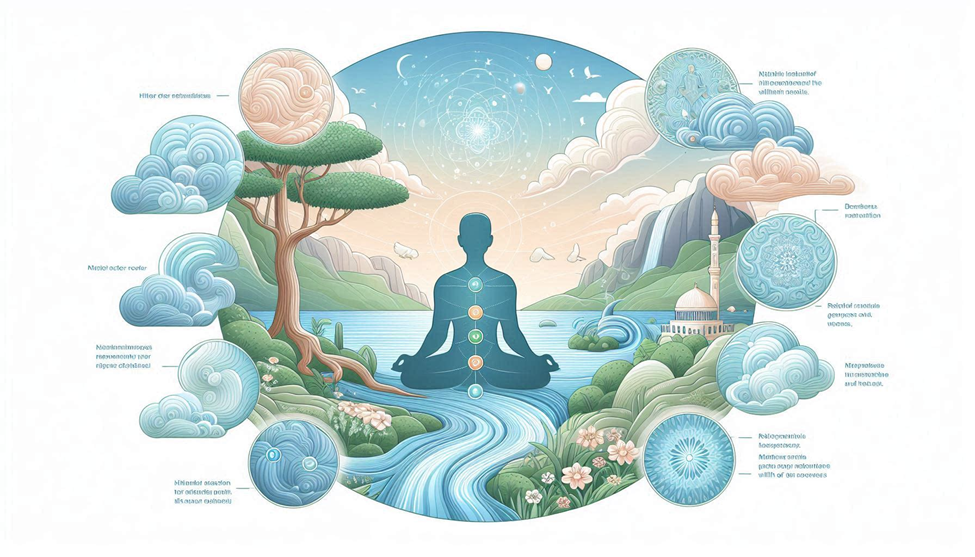
The Role of Tabbed in Nervous System Regulation
Introduction In an age marked by chronic stress, sensory overload, emotional deregulation, and rising rates of anxiety-related disorders, there is renewed interest in practices that naturally calm and regulate the nervous system. Modern neuroscience increasingly recognizes the importance of rhythm, repetition, breath, meaning, and focused attention in restoring physiological balance. Long before these concepts were…
-

The Stress-Reducing Power of Night Prayer (Tahajjud)
Introduction Modern life is characterized by relentless pressure, cognitive overload, emotional fatigue, and chronic stress. Despite technological convenience, rates of anxiety disorders, insomnia, depression, and burnout continue to rise globally. Contemporary psychology increasingly acknowledges the importance of contemplative practices, silence, circadian alignment, and meaning-centered rituals in stress regulation. Within Islamic tradition, Tahajjud, the voluntary night…
-

Islamic Simplicity: Reducing Mental Clutter
Introduction: The Age of Mental Clutter Modern life has introduced an unprecedented cognitive and emotional burden. Notifications ping constantly, social media demands our attention, and the pressures of multitasking fragment our focus. The brain, designed for reflection and deep attention, now struggles to maintain clarity. This overstimulation produces what modern psychology calls “cognitive clutter”—a state…
-

Managing Family Stress through Prophetic Communication
Introduction Family is the primary environment in which emotional patterns are formed, stress is experienced, and psychological resilience is either nurtured or weakened. While families are meant to be sources of comfort and security, they can also become spaces of tension, misunderstanding, and emotional overload. Modern family life is increasingly strained by financial pressure, role…

Monday – Saturday 9AM – 5PM
Sunday – CLOSED