
-

Attention Economics and Lifestyle Design
Introduction: Attention Is the New Limiting Resource In the modern world, the nature of scarcity has fundamentally changed. Information is no longer rare, nor is opportunities, tools, or access. Knowledge is instantly available, platforms are endlessly expandable, and connectivity is constant. What has become genuinely scarce is attention. Attention now stands as the primary bottleneck…
-
High-Performance Routines without Burnout
Introduction: The Burnout Paradox of Modern Performance High performance has become one of the most celebrated ideals of modern life. Productivity, discipline, ambition, and relentless execution are praised as markers of success. Morning routines are optimized to the minute, workdays are packed with output goals, and rest is often treated as a reward rather than…
-

Lifestyle Boundaries That Protect Performance
Introduction In high-demand lifestyles, performance breakdown is rarely the consequence of insufficient discipline, motivation, or competence. More often, it emerges from boundary erosion—a gradual loss of structure that leaves attention, energy, and emotional capacity exposed to constant demand. When boundaries weaken, energy leaks in small but persistent ways. Focus becomes fragmented by interruptions. Recovery windows…
-

Workday Design for Cognitive Efficiency
Introduction Modern workdays are rarely designed to align with how the human brain actually functions. Instead, they are shaped by external forces—calendars packed with meetings, constant notifications, artificial urgency, and cultural expectations of perpetual availability. The result is a familiar paradox: people work longer hours than ever before, yet experience declining focus, slower thinking, increased…
-

Balancing Training Volume with Mental Health
Introduction: When More Is Not Better In contemporary fitness and sport culture, training volume is often treated as a badge of honor. More sessions, more sets, more miles, more intensity. Social media platforms amplify this mindset by celebrating exhaustion, visible suffering, and relentless discipline as proof of commitment and superiority. Athletes and exercisers are subtly…
-

Functional Training: Move Better, Perform Better
Introduction: Why Functional Training Matters In an era where fitness is often reduced to aesthetics—bigger muscles, leaner bodies, and dramatic transformations—functional training re-centers the conversation around what truly matters: how well your body moves and performs in real life. Functional training is not a trend or a replacement for traditional strength training; rather, it is…
-

Neuromuscular Activation Techniques before Workouts
Introduction Traditional warm-ups have long emphasized increasing body temperature, stretching muscles, and lightly rehearsing movement patterns. These components remain valuable for preparing tissues and joints for activity, but modern sport science and performance training have revealed a deeper and more influential layer of preparation: neuromuscular activation. This layer focuses not just on warming the body,…
-

Progressive Overload: The Key to Consistent Muscle Growth
Introduction Muscle growth—also known as skeletal muscle hypertrophy—is not an accidental byproduct of training. It is the predictable physiological response to repeated exposure to a stimulus that challenges the body beyond its current capabilities, applied consistently and supported by adequate recovery. While training culture is saturated with new workout systems, exercise variations, and aesthetic-driven routines,…
-
Beginner Workouts for Absolute Newbie’s: a Complete Guide to Starting Safely and Successfully
Introduction Beginning a fitness journey can feel overwhelming, especially for absolute beginners with little or no experience in structured exercise. The abundance of fitness advice, social media workouts, and “quick-fix” transformation programs often creates the false impression that success requires extreme intensity, complex routines, or expensive equipment. In reality, the most effective and sustainable fitness…
-
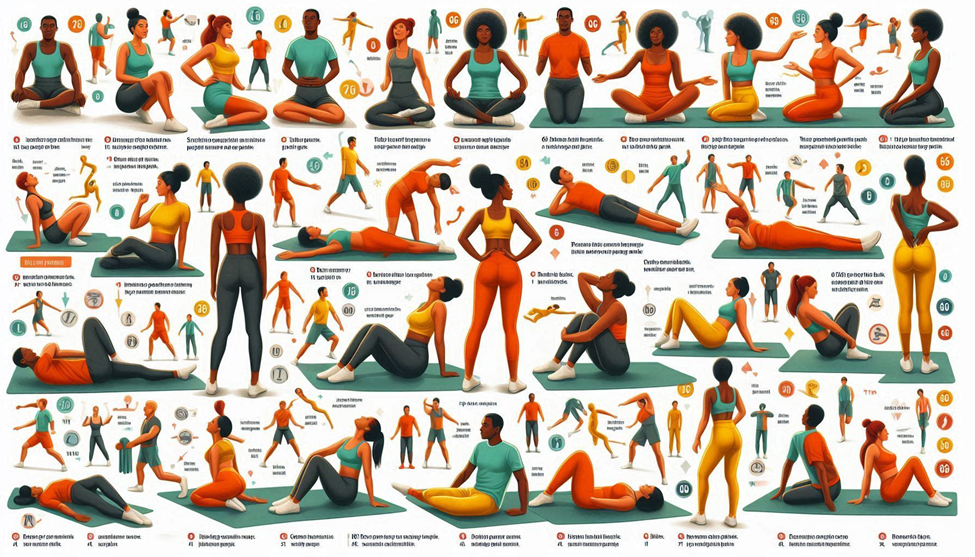
Exercises to Improve Posture and Reduce Back Pain
Introduction Poor posture and chronic back pain have become defining physical challenges of modern life, affecting individuals across all ages and activity levels. The modern environment encourages prolonged sitting, excessive screen exposure, reduced daily movement, and high cognitive stress, often within workspaces that are poorly designed for human biomechanics. These conditions promote muscular imbalances, joint…

Monday – Saturday 9AM – 5PM
Sunday – CLOSED