

Dementia, a syndrome characterized by a decline in cognitive function, presents profound challenges for individuals, their families, and caregivers. Among the most distressing and common behavioral and psychological symptoms of dementia (BPSD) is agitation—a state of verbal, vocal, or motor behavior that is disruptive, unsafe, or creates stress for the person or those around them. While pharmacological interventions are often employed, their efficacy is limited and they carry significant risks. Consequently, non-pharmacological, person-centered approaches have become the cornerstone of effective dementia care. For the global Muslim population, which exceeds 1.8 billion, creating a culturally and spiritually resonant environment is not merely an enhancement but a fundamental aspect of person-centered care. This article explores the conceptualization and implementation of an Islamic dementia-friendly environment, detailing how integrating Islamic principles, spiritual practices, sensory cues, and community ethics can significantly reduce agitation and enhance the quality of life for Muslim individuals living with dementia.
Introduction: The Imperative for Culturally-Sensitive Dementia Care
Dementia care has evolved from a purely medical model to a bio-psycho-social-spiritual paradigm. This shift acknowledges that an individual’s identity, rooted in their life history, culture, and beliefs, persists even as cognitive faculties diminish. For a Muslim, faith (Iman) is not a compartmentalized aspect of life but the very lens through which the world is perceived and experienced. It shapes daily rituals, social interactions, ethical frameworks, and understanding of life’s trials, including illness.
Agitation in dementia often arises from unmet needs, environmental overstimulation or under-stimulation, fear, and the profound frustration of a world that has become unfamiliar and confusing. (Cohen-Mansfield, 2000). Standard dementia-friendly design principles—such as clear wayfinding, controlled sensory input, and familiar objects—are essential. However, for a Muslim with dementia, an environment devoid of Islamic cues may itself be a source of spiritual disorientation and distress, potentially exacerbating agitation. Therefore, an Islamic dementia-friendly environment seeks to create a space that is not only safe and comprehensible but also spiritually nourishing and identity-affirming.
Theoretical Foundations: Person-Centered Care Meets Islamic Ethics
The creation of an Islamic dementia-friendly environment is underpinned by two complementary frameworks: Tom Kitwood’s person-centered care model and Islamic ethics of care.
Kitwood (Kitwood, 1997) revolutionized dementia care by proposing that the manifestation of dementia is not solely a result of neuropathology but is significantly influenced by the “social psychology” surrounding the individual. He emphasized the continued personhood of the individual, advocating for care that validates feelings, honors life history, and provides a supportive social environment to foster well-being. An Islamic application of this model insists that for a Muslim, “personhood” is inextricably linked to their relationship with Allah (God), their identity as a worshipper, and their place within the Ummah (global Muslim community).
Islamic ethics provide a robust foundation for this care. Key principles include:
- Amanah (Trust): The caregiver’s role is a sacred trust to protect the dignity and rights of the care recipient.
- Ihsan (Excellence and Compassion): To perform care with beauty, kindness, and a consciousness that one is serving Allah by serving His creation.
- Rahma (Mercy): Central to Islamic theology, mercy must be the guiding emotion in all interactions.
- Respect for the Elderly: The Qur’an and Prophetic traditions (Sunnah) repeatedly command respect, kindness, and patience towards elders. The Prophet Muhammad (peace be upon him) said, “He is not one of us who does not show mercy to our young and respect to our elders.”
- Preservation of Dignity (Karāmah Insān): Every human possesses inherent God-given dignity that must be preserved, especially in states of vulnerability.
An Islamic dementia-friendly environment operationalizes these ethics into physical, psychosocial, and procedural design.
Pillars of an Islamic Dementia-Friendly Environment
1. The Spiritual-Psychosocial Environment: Cultivating Tranquility (Sakīnah)
The core goal is to infuse the environment with Sakīnah—a divine tranquillity that settles the heart. This begins with the social milieu.
- Caregiver Knowledge and Demeanor: All staff, Muslim and non-Muslim, should receive foundational training in Islamic practices and etiquette. This includes understanding the importance of prayer, modesty, dietary laws, and using culturally appropriate greetings (e.g., Assalamu alaikum). Caregivers should be trained to recognize and respond to religious expressions, even if fragmented. A person repetitively whispering “Allah, Allah” may be engaged in Dhikr (remembrance of God), a calming practice to be encouraged, not redirected.
- Communication Rooted in Respect: Language should honor the individual’s lifetime of religious commitment. Phrases like Insha’Allah (God willing), Alhamdulillah (Praise be God), and SubhanAllah (Glory be to God) can be naturally integrated into conversation, providing spiritual reassurance. The Qur’an encourages speaking to elders with gentle, respectful speech (Qur’an 17:23).
- Life Story and Identity Work: Personal histories should document religious milestones (Hajj, daily prayer history, favorite Quranic chapters), preferred Islamic names, and spiritual inclinations. This allows care to be tailored—for example, playing a recording of the Adhan (call to prayer) from a mosque they attended or facilitating tactile engagement with a personal prayer rug or Misbaha (prayer beads).
2. The Physical and Sensory Environment: Designing for Familiarity and Focus
The physical space must cue Islamic routines and minimize agitating stimuli.
- Orientation and Wayfinding:
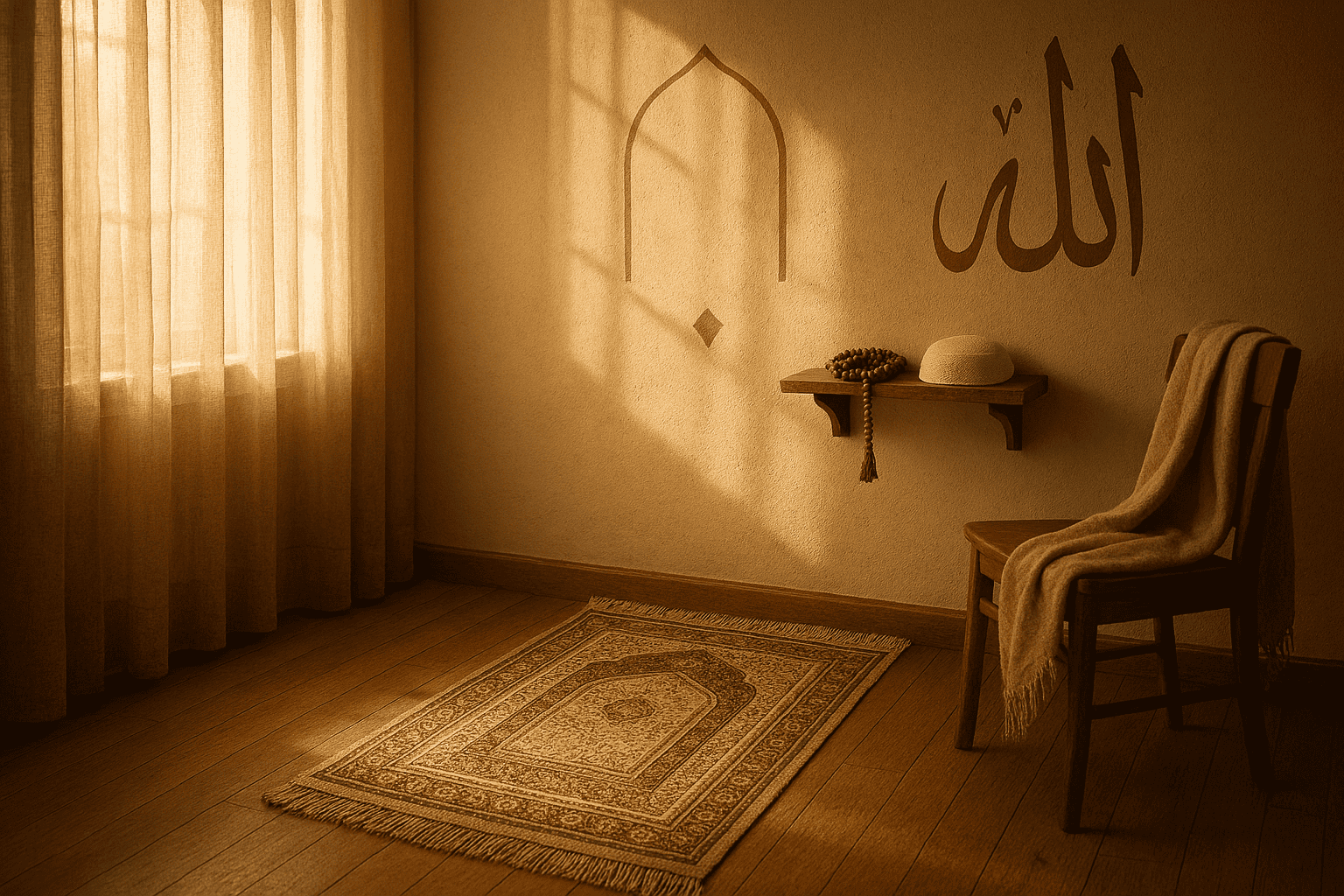
- Qibla Direction: The direction of prayer (Qibla) towards Mecca should be clearly and consistently marked in every room, especially bedrooms and common spaces. This can be done with subtle architectural features, calligraphy panels, or lighted indicators. It provides a constant, orienting spiritual anchor.
- Familiar Symbols: Decorate with culturally familiar, non-abstract art—such as images of the Ka’aba, the Al-Aqsa Mosque, or Arabic calligraphy of the 99 Names of Allah or short chapters (e.g., Surah Al-Ikhlas). These symbols can trigger positive autobiographical memories and a sense of belonging.
- The Prayer (Salah) Space: Creating an accessible, inviting prayer area is critical.
- It should be quiet, clean, and clearly designated.
- Provide easy-access prayer garments (simple caps, shawls) and clean, textured prayer rugs to aid tactile grounding.
- Consider providing supportive chairs or benches for those who cannot perform physical postures, validating the intention (Niyyah) and recitation as the core of the prayer.
- The Adhan can be broadcast at prayer times, not just as a cue for prayer but as a powerful auditory anchor that structures the day and evokes deep-seated emotional resonance.
- Sensory Modulation:
- Auditory Environment: The soundscape is paramount. Soothing, continuous recitation of the Qur’an by a familiar reciter (e.g., Sheikh Abdul Basit, Sheikh Al-Hussary) can be profoundly calming. Studies have shown that listening to the Qur’an can reduce physiological markers of stress. (Kamaruzaman et al., 2019). Conversely, loud noises, TV chatter, and music (often considered impermissible (Haram) in traditional Islam) should be minimized.
- Olfactory Environment: Clean, natural scents are emphasized in Islamic tradition. Using subtle aromas of Oud (agarwood), rose, or musk—scents associated with cleanliness and piety—can be soothing and evocative of positive memories (e.g., the mosque, Friday gatherings).
- Tactile Environment: Provide access to textured Tasbeeh (prayer beads), smooth worry stones, or the feel of running water for ablution (Wudu). The ritual washing for prayer is not only purification but also a sensory, cooling activity that can redirect agitation.
3. Rituals, Routines, and Meaningful Activity
Routine provides predictability, reducing anxiety. Islamic rituals offer a structured, meaningful framework for the day.
- Facilitating Modified Prayer: Even if the full sequence is impossible, the essence of prayer can be maintained. Caregivers can assist with ablution, help the individual face the Qibla, and facilitate the recitation of short chapters or even the repetition of “SubhanAllah” (Glory be to God). The focus is on connection, not perfection.
- Ramadan and Festivals: Adapting celebrations like Ramadan and Eid is vital. During Ramadan, the pre-dawn (Suhoor) and sunset (Iftar) meals can be communal, joyful events, even if the individual is not fasting. The atmosphere should reflect the blessedness of the month. For Eid, decorations, special foods, and simple visits (with careful management of overstimulation) affirm continued membership in the community.
- Qur’anic Engagement: Beyond listening, individuals can be engaged with the Qur’an through gentle, guided recitation, looking at large-print Arabic scripts, or listening to familiar stories of the Prophets. This is a powerful form of cognitive and spiritual stimulation.
- Dhikr (Remembrance of God) Groups: Simple, repetitive, group Dhikr (e.g., repeating “La ilaha illallah” – There is no god but God) can induce a meditative state, reduce heart rate, and foster a powerful sense of group belonging and peace.
4. The Role of Family and Community (Ummah)
An Islamic environment extends beyond care home walls. The concept of Ummah implies collective responsibility.
- Family as Partners: Families should be welcomed as essential partners, encouraged to participate in rituals, share meals, and provide spiritual support. A dedicated, quiet space for family visits is crucial.
- Community Volunteers: Local mosques and Islamic centers can organize volunteer programs where trained individuals visit for Qur’an reading, companionship, or to lead Friday (Jumu’ah) prayers on-site. This bridges the gap between the individual and their lifelong community.
- End-of-Life Care: The environment must support Islamic death and dying practices. This includes facilitating the recitation of Shahada, turning the bed towards the Qibla, allowing family to perform rituals, and ensuring immediate and respectful post-mortem care in accordance with Islamic law.
Challenges and Considerations
Implementing this model requires navigating several challenges:
- Diversity within Islam: The Muslim world is ethnically, linguistically, and theologically diverse. A “one-size-fits-all” approach is ineffective. An Indonesian Muslim may have different cultural associations than an Arab or a Nigerian Muslim. Personalization based on life story is key.
- Staff Training and Resources: Adequate training for a multicultural staff and securing resources for environmental modifications (e.g., Qibla indicators) require institutional commitment.
- Balancing Stimulation and Overload: While Islamic cues are positive, they must be introduced thoughtfully to avoid sensory or cognitive overload, which could paradoxically increase agitation.
- Advanced Dementia: In later stages, the focus may shift entirely to sensory spirituality—the sound of water for ablution, the touch of beads, the soothing voice of Qur’an, and the consistent, kind touch of a caregiver who understands the sacredness of their role.
Conclusion
Creating an Islamic dementia-friendly environment is an act of Ihsan—striving for excellence in care that honors the whole person. It moves beyond the management of agitation to the cultivation of spiritual well-being. By embedding Islamic principles into the physical space, daily routines, and social interactions, we create a holding environment that reduces the terror of disorientation. It tells the individual, through every sensory and social cue: “You are in a place that understands you. Your faith is intact. Your identity is respected. You are safe, and you are not alone.”
This model does not replace clinical best practices but enriches them, offering a culturally congruent pathway to reduce agitation, mitigate suffering, and affirm the enduring personhood of the Muslim individual with dementia. It stands as a call to researchers, clinicians, and Islamic communities to collaborate in developing evidence-based guidelines, training programs, and design standards that translate these principles into widespread, compassionate practice. In doing so, we answer a profound ethical and religious call to care for our elders with the mercy and dignity their lifetime of faith deserves.
SOURCES
Cohen-Mansfield, J. (2000). Theoretical frameworks for behavioral problems in dementia. Alzheimer’s Care Quarterly, *1*(4), 8–21.
Kamaruzaman, N. A., Ghazali, M. F., & Daud, N. A. (2019). The effects of listening to Al-Quran recitation on psychological and physiological responses among Muslim students. International Journal of Academic Research in Business and Social Sciences, *9*(11), 1312–1322.
Kitwood, T. (1997). Dementia reconsidered: The person comes first. Open University Press.
HISTORY
Current Version
Jan 3, 2026
Written By
SUMMIYAH MAHMOOD



Leave a Reply