

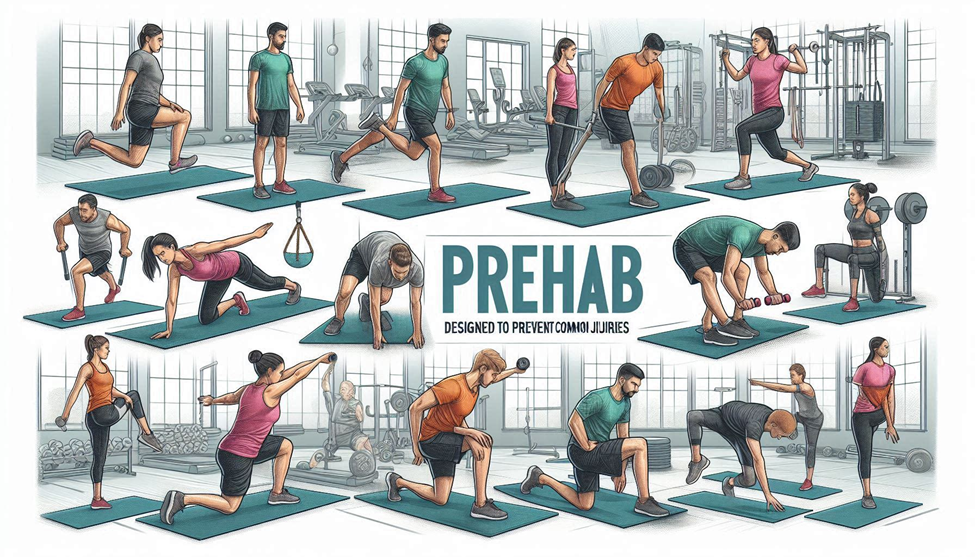
Introduction: Why Prefab Matters More than Rehab
In modern training culture, injury prevention is frequently overshadowed by visible performance outcomes such as heavier lifts, leaner physiques, faster race times, or higher training volumes. Yet the most durable athletes and long-term exercisers recognize a fundamental truth: progress is only possible when training can be sustained without interruption. Rehabilitation—or prefab—addresses this reality by shifting the focus from reactive treatment to proactive protection. Rather than responding to pain after it appears, prefab strengthens the body’s weak links, refines movement patterns, and builds resilience before injury has the opportunity to develop.
Prefab is not reserved for elite or competitive populations. Office workers exposed to prolonged sitting, recreational lifters repeating similar movement patterns, runners accumulating impact forces, and older adults managing age-related changes all face predictable stressors. Over time, poor posture, limited mobility, asymmetrical strength, and inadequate neuromuscular control gradually overload joints and connective tissues. This cumulative stress often presents as familiar issues such as shoulder impingement, chronic knee discomfort, low-back strain, Achilles irritation, or hip instability. Prefab intervenes at the root of these problems by improving joint alignment, muscular balance, and tissue tolerance.
Effective rehabilitation emphasizes quality over intensity. It prioritizes controlled range of motion, proper sequencing of muscle activation, and efficient load distribution across joints. Exercises are typically low to moderate in load but high in intent, reinforcing stability, mobility, and coordination. When performed consistently, these strategies enhance movement efficiency, reduce compensatory patterns, and improve the body’s capacity to absorb and transmit force safely.
This guide provides a structured, evidence-informed framework for integrating prefab into any training or lifestyle routine. It outlines foundational principles, identifies common injury-prone regions, and presents practical exercise progressions that fit seamlessly into warm-ups, recovery sessions, or dedicated mobility work. By embedding prefab into regular practice, individuals protect their ability to train, move, and perform over the long term—transforming injury prevention from an afterthought into a cornerstone of sustainable health and performance.
Understanding the Foundations of Injury Prevention
Movement Quality over Muscle Strength
Injury risk is rarely the result of weakness alone. More often, it arises from poor coordination, limited mobility, or an inability to control force through full ranges of motion. A muscle can be strong in isolation yet fail to stabilize a joint dynamically during real-world movement. Prefab prioritizes controlled, intentional movement patterns that enhance neuromuscular efficiency.
Load Tolerance and Tissue Capacity
Every tissue—muscle, tendon, ligament, and cartilage—has a finite capacity to tolerate stress. Injuries occur when applied loads exceed that capacity faster than adaptation can occur. Prefab gradually increases tissue tolerance by applying low-to-moderate loads through controlled ranges, allowing connective tissues to adapt safely.
Joint-Centric Training
Rather than training muscles in isolation, prefab focuses on joint function. Healthy joints require:
- Adequate mobility
- Dynamic stability
- Balanced force distribution
- Proprioceptive awareness
When one of these elements is missing, compensations develop elsewhere in the kinetic chain.
Common Injury Patterns and Their Root Causes
Shoulder Injuries
Common conditions include rotator cuff strains, impingement syndromes, labial irritation, and biceps tendinopathy. These often stem from:
- Poor scapular control
- Limited thoracic spine mobility
- Dominant anterior musculature
- Weak or delayed rotator cuff activation
Knee Injuries
Anterior knee pain, patellar tendinopathy, meniscus irritation, and ligament strain are frequently linked to:
- Weak hip stabilizers
- Poor ankle mobility
- Excessive values collapse
- Inadequate eccentric control
Lower Back Pain
Low-back injuries are rarely isolated spinal problems. They often reflect:
- Poor core stability
- Limited hip mobility
- Weak glutei engagement
- Excessive lumbar extension or flexion under load
Hip Dysfunction
Hip pain and mobility restrictions may arise from:
- Prolonged sitting
- Poor pelvic control
- Weak deep stabilizers
- Overactive hip flexors
Ankle and Foot Injuries
Sprains, plantar fasciitis, and Achilles issues often result from:
- Limited dorsiflexion
- Weak intrinsic foot muscles
- Poor proprioception
- Excessive stiffness or laxity
Prefab for the Shoulder Complex
Key Objectives
- Restore scapular rhythm
- Improve rotator cuff endurance
- Enhance thoracic mobility
- Balance pushing and pulling patterns
Foundational Exercises
- Scapular Wall Slides: Improves upward rotation, posterior tilt, and shoulder flexion mechanics.
- Prone Y, T, and W Raises: Targets lower and middle trapeziums for scapular stability.
- External Rotation with Band or Cable: Builds rotator cuff endurance rather than maximal strength.
- Serrate Anterior Push-Ups: Enhances scapular protraction and shoulder stability under load.
Programming: 2–4 sets of 10–15 controlled repetitions, 3–4 times per week.
Prefab for the Elbow and Wrist
Key Objectives
- Improve forearm balance
- Increase tendon resilience
- Reduce repetitive strain
Essential Exercises
- Wrist Flexion and Extension (Eccentric Focus): Supports tendon health and load tolerance.
- Forearm Probation and Suspiration: Enhances rotational strength and elbow stability.
- Grip Variability Drills: Using towels, fat grips, or rice buckets to improve tissue capacity.
Prefab for the Spine and Core
Rethinking Core Stability
Core training for injury prevention is not about maximal contraction or visible abdominal definition. Instead, it emphasizes anti-movement capacity—the ability to resist unwanted motion while transferring force efficiently.
Core Prefab Exercises
- Dead Bugs: Promote contra lateral coordination and spinal neutrality.
- Bird Dogs: Enhance posterior chain integration and lumbar stability.
- Side Planks: Target lateral stabilizers often neglected in sagittal-plane training.
- Pallor Press Variations: Develop anti-rotation control under progressive resistance.
Prefab for the Hip Complex
Why Hip Health Is Central to Injury Prevention
The hips act as a force transfer hub between the upper and lower body. Dysfunction here often cascades into knee, back, or ankle problems.
Foundational Hip Prefab Exercises
- Glutei Bridges and Variations: Restore hip extension mechanics and posterior chain activation.
- Banded Lateral Walks: Strengthen the gluteus mediums for frontal-plane stability.
- Hip CARs (Controlled Particular Rotations): Improve joint capsule health and neuromuscular awareness.
- Split Squat Isometric Holds: Build joint resilience through long-duration tension.
Prefab for the Knee
Knee Stability Is a Whole-Chain Issue
The knee depends heavily on hip control above and ankle mobility below. Prefab must address both ends of the kinetic chain.
Effective Knee Prefab Exercises
- Spanish Squats: Reduce patellar stress while strengthening quadriceps.
- Step-Downs: Improve eccentric control and frontal-plane knee stability.
- Terminal Knee Extensions: Enhance quadriceps activation and joint awareness.
- Hamstring Curls (Eccentric Focus): Protect the knee by improving posterior support.
Prefab for the Ankle and Foot
The Importance of Foot Strength
The foot is the foundation of movement. Weak or stiff feet compromise force absorption and balance.
Essential Exercises
- Ankle Dorsiflexion Mobilizations: Restore range of motion critical for squatting and running.
- Calf Rises (Straight and Bent Knee): Address both gastronomies and soles strength.
- Single-Leg Balance with Perturbations: Enhance proprioception and injury resistance.
- Short Foot Exercises: Strengthen intrinsic foot musculature.
Integrating Prefab into Training Programs
Warm-Up Integration
Prefab works best when integrated into warm-ups, not treated as an optional add-on. A well-designed warm-up prepares joints, activates stabilizers, and reinforces proper movement patterns.
Standalone Prefab Sessions
Dedicated sessions are beneficial during:
- Reload weeks
- Return-from-injury phases
- High-stress training cycles
Frequency and Progression
Prefab should be:
- Performed 3–6 days per week
- Progressed gradually
- Maintained year-round
Psychological and Long-Term Benefits of Prefab
Beyond physical resilience, rehabilitation cultivates a deeper sense of body awareness, movement confidence, and long-term sustainability in training. By consistently engaging in prefab practices, individuals learn to recognize how their bodies move, compensate, and respond to load. This heightened awareness allows athletes and recreational exercisers alike to detect early signs of fatigue, restriction, or imbalance before they escalate into pain or injury. Rather than training blindly, movement becomes intentional, precise, and self-regulated.
Prefab also builds confidence in movement. When joints feel stable, ranges of motion are controlled, and muscles activate in proper sequence, individuals trust their bodies under load and during complex tasks. This confidence reduces fear-based movement patterns, which are a common contributor to compensations and chronic injuries. Athletes who feel secure in their movement mechanics are more willing to train consistently, explore new skills, and progress without hesitation. Over time, this psychological benefit becomes as valuable as the physical adaptations themselves.
Consistency is the most powerful driver of long-term results, and prefab directly protects it. Fewer injuries mean fewer forced breaks, less regression, and a more predictable training trajectory. Athletes who prioritize prefab often experience smoother progressions, more stable performance levels, and a reduced need for reactive rehabilitation. This continuity allows training adaptations to accumulate gradually, supporting durable strength, endurance, and skill development rather than cycles of progress and setback.
From a longevity perspective, prefab shifts training from a short-term pursuit to a sustainable practice. It encourages respect for recovery, joint health, and movement quality, which become increasingly important with age and accumulated training volume. By reinforcing efficient mechanics and balanced loading, prefab helps preserve connective tissue integrity and neuromuscular coordination over time.
Ultimately, rehabilitation is not a limitation on performance but a multiplier of it. Athletes who integrate prefab into their routines do not merely avoid injury—they extend their training lifespan, maintain higher performance standards for longer periods, and develop a resilient, self-aware relationship with movement that supports lifelong health and athletic capability.
Conclusion
Functional fitness is not a trend; it is a return to purpose-driven movement that reflects how the human body was designed to function across a lifetime. Unlike training models that prioritize appearance or sport-specific performance in isolation, functional fitness prepares individuals for the physical realities of daily life—lifting groceries, carrying children, climbing stairs, maintaining balance, recovering from a misstep, or rising from the floor. These seemingly ordinary actions define independence, especially as people age, yet they are often neglected in conventional fitness programs.
As populations grow older and modern lifestyles become increasingly sedentary, the consequences of poor movement quality become more pronounced. Loss of muscle mass, joint stiffness, reduced balance, and slower reaction times can gradually erode confidence and autonomy. Functional fitness addresses these challenges by training the body as an integrated system rather than a collection of isolated muscles. Multi-joint, multi-planar movements enhance coordination between the nervous system and musculature, reinforcing patterns that translate directly to real-world tasks.
Aging well does not mean eliminating physical decline altogether; it means slowing its progression, minimizing unnecessary limitations, and adapting intelligently to physiological change. Functional fitness supports this process by emphasizing joint health, postural control, muscular balance, and mobility alongside strength. Exercises are scalable and adaptable, allowing training to evolve with the individual’s needs, abilities, and recovery capacity. This makes functional fitness uniquely sustainable, encouraging consistency rather than burnout or injury.
Beyond physical benefits, functional fitness fosters confidence and resilience. When individuals trust their ability to move safely and effectively, they are more likely to remain active, socially engaged, and independent. In this way, functional training extends its impact beyond the gym, supporting mental well-being and overall quality of life. Ultimately, functional fitness reframes exercise as a lifelong investment in capability, dignity, and freedom—ensuring that strength remains useful, movement remains meaningful, and aging becomes a process of continued participation rather than gradual withdrawal from life.
SOURCES
American College of Sports Medicine (2009) – Exercise and Physical Activity for Older Adults
World Health Organization (2015) – World Report on Ageing and Health
National Institute on Aging (2018) – Exercise and Physical Activity Guidelines
Chodzko-Zajko et al. (2009) – ACSM Position Stand on Physical Activity and Aging
Spirduso, Francis & Macramé (2005) – Physical Dimensions of Aging
Rilke & Jones (2013) – Senior Fitness Test Manual
Sherrington et al. (2017) – Exercise Interventions for Fall Prevention
Grenache et al. (2013) – Balance and Strength Training in Older Adults
Clark & Marini (2012) – Functional Consequences of Sarcopenia
Peterson et al. (2010) – Resistance Exercise and Muscular Strength in Aging
Liu & Latham (2009) – Progressive Resistance Training for Physical Function
Cadre & Inquired (2013) – Strength Training and Functional Capacity in Aging
Booth, Roberts & Layer (2012) – Physical Inactivity and Chronic Disease
Franchise, Reeves & Marci (2017) – Skeletal Muscle Remodeling with Aging
Boehm et al. (2010) – Neuromuscular Adaptations to Functional Training
McGill (2014) – Ultimate Back Fitness and Performance
Kraemer & Retimes (2004) – Resistance Training Progression Models
Haskell et al. (2007) – Physical Activity and Public Health Recommendations
Hawley & Thompson (2012) – Fitness Professional’s Handbook
Huff & Triplett (2016) – Essentials of Strength Training and Conditioning
Schoenfeld (2010) – Mechanisms of Muscle Hypertrophy and Strength
Hunter, McCarthy & Barman (2004) – Resistance Training Adaptations in Older Adults
Powers & Hawley (2018) – Exercise Physiology: Theory and Application
Inquired et al. (2021) – International Recommendations for Resistance Training in Older Adults
ACSM & AHA (2007) – Physical Activity and Health in Older Populations
HISTORY
Current Version
Dec 18, 2025
Written By
ASIFA




Leave a Reply