

Introduction
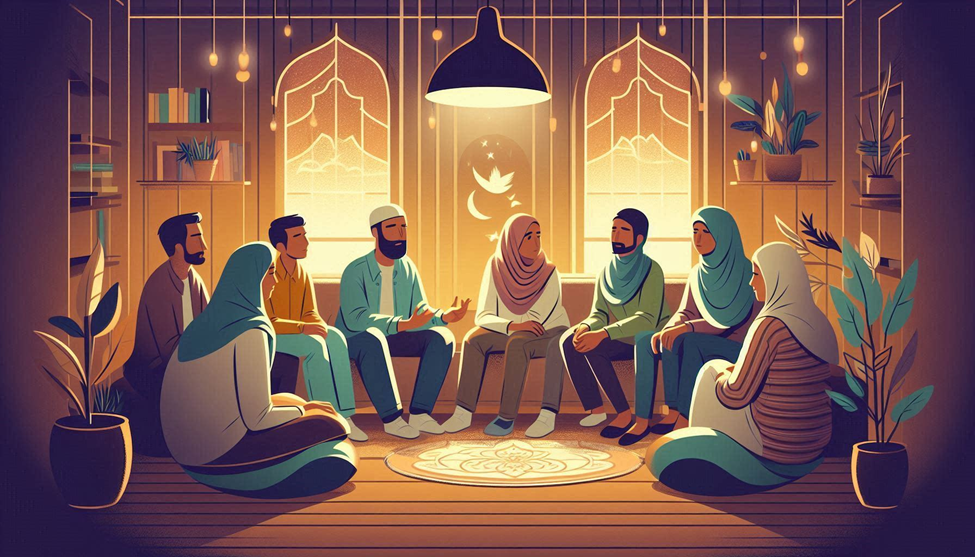
Mental health and emotional well-being are increasingly recognized as integral components of holistic human development. Yet, cultural, social, and personal barriers often prevent individuals from seeking help for psychological distress. Shame, stigma, and misconceptions frequently inhibit the utilization of both professional services and community support. Within the Islamic framework, however, seeking help is neither discouraged nor seen as a sign of weakness; rather, it is encouraged when approached with sincerity, balance, and trust in Allah.
Islamic teachings emphasize the integration of faith, reason, and social support, framing emotional support not as a luxury, but as a moral and spiritual responsibility. The Qur’an and Sunni highlight both personal accountability and communal care, acknowledging the human tendency toward stress, sorrow, and psychological struggle. Prophetic guidance underscores that vulnerability is natural, and seeking assistance—whether through prayer, do’s, counseling, or community resources—is consistent with tawakkul (trust in God) and Hamah (practical wisdom).
This guide explores Islamic perspectives on seeking emotional support without shame, integrating classical scholarship, contemporary psychology, and real-life applications. It examines the theological foundation, the role of social networks, the balance between self-reliance and assistance, and practical strategies to normalize help-seeking in Muslim communities. Special attention is given to overcoming barriers such as stigma, gender expectations, and misinterpretations of reliance on Allah.
1. Theological Foundation of Help-Seeking in Islam
1.1 Tawakkul and Human Agency
A common misconception is that reliance on others or professional help diminishes trust in Allah. Classical scholars such as Al-Ghastly (1100) and Bin al-Qayyim (1350) clarify that tawakkul (trust in God) is not passive resignation but active reliance paired with effort. Seeking help—whether through counseling, mentorship, or social support—is a manifestation of using the resources Allah has provided.
The Qur’an emphasizes the balance between divine reliance and human action:
“And rely upon Allah; and sufficient is Allah as Disposer of affairs” (Qur’an 33:3).
Here, reliance implies trust, but the verse presupposes action—which includes taking steps to address emotional, psychological, or social needs. Seeking help, therefore, aligns with Islamic ethics, demonstrating both humility and proactive responsibility.
1.2 Human Vulnerability and Spiritual Recognition
Islamic psychology recognizes the natural human propensity for stress, sadness, and emotional struggle. The Prophet ﷺ acknowledged human vulnerability and recommended spiritual and practical means of addressing distress, including dos, supplication, social support, and consultation with knowledgeable individuals. Acknowledging emotional pain is not sinful; it reflects fit rah (human nature) and the necessity of care.
Classical texts such as Al-Ghastly (11th century) and Qur’an commentaries stress the importance of maintaining balance, including psychological well-being. Suppressing emotions out of fear of shame can lead to harm, while seeking support demonstrates wisdom and responsible stewardship of the soul.
2. Stigma and Shame: Barriers to Help-Seeking
2.1 Cultural Misinterpretations
In many Muslim communities, emotional struggles are often interpreted as weak faith or lack of spiritual commitment. Misreading personal distress as a spiritual failing creates internalized shame, deterring individuals from seeking assistance. For example, someone experiencing anxiety may believe they are spiritually deficient, rather than recognizing anxiety as a human response that requires management.
2.2 Gendered Expectations
Gender norms can exacerbate shame. Men may be discouraged from expressing vulnerability due to cultural constructions of masculinity, while women may fear judgment for discussing emotional struggles publicly. Islamic guidance, however, emphasizes equitable access to emotional support and recognizes the universality of human need, irrespective of gender.
2.3 Community Pressure and Privacy Concerns
Communal pressure to maintain outward appearances can inhibit help-seeking. People may avoid counseling or mentorship for fear of gossip or loss of social standing. Addressing these concerns requires community education, destigmatization, and reinforcement of Islamic principles supporting care, confidentiality, and compassion.
3. Social and Community Dimensions of Emotional Support
3.1 Family as the First Line of Support
Islamic tradition emphasizes family responsibility in emotional care. Parents, siblings, and extended family serve as both spiritual and practical support networks. The Qur’an encourages mutual compassion and empathy:
“And we have enjoined upon man [care] for his parents. His mother carried him, [increasing her] in weakness upon weakness…” (Qur’an 31:14).
While this verse primarily addresses physical care, scholars have extended the principle to emotional support, emphasizing empathy, patience, and presence in times of distress.
3.2 Community Structures
Mosques, Islamic centers, and faith-based organizations serve as essential platforms for emotional support. Programs such as support groups, mentorship circles, and counseling services normalize help-seeking while reinforcing spiritual grounding. Community leaders can destigmatize emotional care by framing it as part of religious and moral responsibility, thereby shifting cultural narratives.
3.3 Shared Spiritual Practices
Group do’s, shirk, and recitation of Qur’an verses provide both emotional regulation and social cohesion. Shared spiritual practices reduce isolation, foster mutual care, and cultivate resilience. Communal engagement reinforces the acceptability of seeking emotional support, linking faith and social responsibility.
4. Integrating Faith-Based Support with Modern Mental Health Practices
4.1 Complementarily with Psychotherapy
Dura, spiritual mentorship, and counseling can complement cognitive-behavioral therapy (CBT) and mindfulness programs. Structured spiritual routines provide focus, grounding, and purpose, while professional therapy addresses cognitive distortions, emotional regulation, and behavioral patterns.
4.2 Enhancing Adherence and Engagement
Spiritually framed interventions increase intrinsic motivation to engage with therapy. When therapy aligns with Islamic beliefs, patients are more likely to adhere to recommended strategies and integrate coping skills into daily routines.
4.3 Training for Culturally Sensitive Care
Mental health professionals serving Muslim populations benefit from awareness of religious and cultural nuances. Understanding Islamic teachings about do’s, community support, and personal responsibility allows clinicians to respectfully integrate spiritual practices while maintaining clinical rigor.
5. Practical Strategies for Seeking Help without Shame
Islamic communities have long emphasized the importance of social cohesion, spiritual guidance, and mutual care. Yet, modern mental health challenges—such as anxiety, depression, and stress—require additional strategies that combine religious wisdom, social support, and psychological best practices. Part 5 explores practical, culturally congruent methods for fostering mental health support within Islamic contexts, highlighting four interrelated approaches: education and awareness, confidentiality and safe spaces, gradual integration, and spiritual anchoring.
5.1 Education and Awareness
Awareness is the first step in normalizing mental health support. Community workshops, khutbahs (sermons), and family discussions can provide information about common mental health challenges, coping strategies, and the religious legitimacy of seeking help. Emphasizing that mental health is part of holistic well-being (al-shah al-nafsiyah we al-ruhaniyah) reduces stigma and encourages individuals to seek support proactively. Highlighting the Prophet Muhammad I’d example is particularly effective. The Prophet consulted with his companions, provided guidance, and supported emotional wellbeing in his community, demonstrating that seeking advice and assistance aligns with Islamic principles. Teaching these examples helps challenge internalized stigma, allowing individuals to view therapy, counseling, or supportive dialogue as an extension of faith rather than a deviation from it.
Workshops can also introduce mental health literacy: explaining the physiological, psychological, and social factors underlying anxiety, depression, or panic, while connecting these insights to spiritual teachings. By integrating science and faith, education fosters a nuanced understanding that mental health is both a moral and practical concern.
5.2 Confidentiality and Safe Spaces
Creating safe, confidential spaces is essential to encourage open discussion of emotional challenges. Islamic centers, mosques, and community organizations can collaborate with trained mental health professionals to provide private counseling sessions. Confidentiality ensures that individuals feel secure sharing their struggles without fear of judgment, gossip, or social repercussions.
Safe spaces also provide psychological scaffolding, where trust, empathy, and understanding are emphasized. For example, peer-support groups or mentor-led circles allow participants to share experiences while maintaining confidentiality. These spaces promote early intervention, reduce the escalation of mental health issues, and reinforce the idea that vulnerability is not a weakness but a pathway to resilience.
5.3 Gradual Integration
Many individuals may feel hesitant to immediately engage in formal therapy due to cultural, personal, or religious concerns. Encouraging gradual steps helps build confidence and trust. Initially, this may involve discussing challenges with a trusted family member, friend, or religious mentor. Over time, individuals may feel more comfortable participating in structured group sessions or seeking professional counseling.
Gradual integration allows the individual to experience positive reinforcement from trusted community members, reducing anxiety about disclosure and increasing adherence to recommended interventions. This stepwise approach also mirrors cognitive-behavioral strategies, which emphasize exposure and incremental habituation to reduce fear and avoidance.
5.4 Spiritual Anchoring
Spiritual practices can significantly strengthen coping mechanisms. Combining do’s (supplication), shirk (remembrance of Allah), mindfulness, and gratitude with interpersonal support reinforces emotional regulation, resilience, and a sense of purpose. Spiritual anchoring provides meaning-making frameworks, helping individuals interpret challenges as opportunities for growth and trust in divine wisdom.
For example, participants in counseling or peer-support groups may be encouraged to begin sessions with a short recitation, reflective meditation, or guided supplication. This dual approach—integrating psychological and spiritual strategies—enhances self-regulation, reduces stress, and fosters sustainable wellbeing.
By combining education, safe spaces, gradual integration, and spiritual anchoring, Islamic communities create a culturally congruent, holistic framework for mental health support. These approaches respect religious beliefs, strengthen social bonds, and provide practical tools for emotional resilience. When integrated with modern psychological methods, this framework ensures that individuals receive comprehensive support, attending simultaneously to their psychological, social, and spiritual needs. Part 5 demonstrates that mental health in Islamic communities is most effectively nurtured through coordinated, compassionate, and faith-aligned strategies, providing both preventive and therapeutic benefits for the amah.
6. Case Studies and Clinical Observations
Research and clinical practice illustrate the benefits of faith-aligned emotional support. Patients with depression or anxiety who incorporated spiritual guidance alongside CBT or counseling reported:
- Increased feelings of hope and purpose
- Reduced shame and guilt about emotional vulnerability
- Enhanced coping skills and interpersonal relationships
Historical examples from the life of the Prophet ﷺ, including reliance on do’s and consultation with trusted companions, provide practical models for contemporary application
7. Limitations and Considerations
While spiritual and social support can provide meaningful relief from stress, anxiety, and emotional distress, it is essential to recognize their limitations within the context of mental health care. Seeking spiritual guidance, do’s, or communal support should never replace urgent clinical intervention in severe psychiatric conditions such as major depressive episodes, acute psychosis, suicidal ideation, or panic disorders that pose immediate risk. Professional assessment and treatment, including psychotherapy or pharmacological intervention when appropriate, remain critical to ensure safety and recovery. Spiritual practices function as complementary tools, enhancing coping and resilience rather than serving as standalone cures for severe mental illness.
Individual differences in belief, religiosity, and cognitive style must also be carefully considered. Not all individuals derive the same comfort or psychological benefit from religious practices; some may feel alienated, skeptical, or overwhelmed by faith-based approaches. Respecting these differences is fundamental to ethical mental health care. Interventions should be personalized, allowing for variability in spiritual engagement, personal convictions, and cultural background, to avoid inadvertently increasing stress or shame.
Misapplication of spiritual guidance without professional oversight can also carry risks. For example, reliance solely on do’s or spiritual mentorship in lieu of evidence-based treatment may delay timely care, potentially exacerbating symptoms. Similarly, oversimplified or rigid spiritual advice—such as framing distress solely as a lack of faith—can contribute to guilt, anxiety, or self-blame.
Finally, effective integration requires balance and collaboration. Religious framing should complement clinical expertise rather than conflict with it. Mental health practitioners and spiritual mentors must communicate and coordinate where appropriate, ensuring interventions respect both professional standards and spiritual frameworks. By acknowledging these limitations and applying spiritual support judiciously, Muslims can safely leverage faith-based and social resources while maintaining the integrity of comprehensive mental health care, fostering holistic well-being without compromise.
Conclusion
Islamic teachings provide a profound and ethically grounded framework for approaching emotional support, emphasizing that seeking help is not a sign of weakness but a manifestation of wisdom and responsibility. Within the Qur’an and Sunni, human vulnerability is acknowledged as part of the natural order, and assistance—whether from God, family, community, or professionals—is encouraged as a form of stewardship over one’s mental, emotional, and spiritual well-being. The Prophet ﷺ himself modeled help-seeking behaviors, demonstrating that vulnerability, supplication, and consultation are consistent with both faith and personal strength. These examples serve as enduring templates for Muslims today, illustrating that reliance on others complements, rather than diminishes, trust in Allah.
Shame and stigma surrounding emotional distress are common barriers in contemporary Muslim communities. Cultural misconceptions often equate psychological struggles with weak faith or personal failure, creating silence and isolation. Islamic guidance directly counters these narratives by normalizing human emotions and emphasizing compassion, empathy, and mutual care. Education, community programs, and modeling from religious leaders can reinforce this understanding, cultivating an environment where seeking help is encouraged and honored.
Integration with modern psychological practices further enhances this approach. Faith-aligned interventions, including do’s, mindfulness, and spiritual mentorship, can be harmonized with cognitive-behavioral therapy, stress reduction programs, and professional counseling. This dual pathway addresses both the spiritual and psychological dimensions of well-being, allowing individuals to cultivate resilience, emotional regulation, and purpose.
Ultimately, Islam provides a holistic framework that bridges traditional wisdom and contemporary mental health science. By combining spiritual reliance, communal engagement, and professional care, Muslims can navigate emotional challenges with dignity and balance. Seeking help is thus reframed as an act of courage and wisdom, fostering not only personal growth but also a culture of empathy, understanding, and sustainable mental health within the wider community.
SOURCES
Al-Ghastly (1100) – Balance of soul and spiritual coping
Bin al-Qayyim (1350) – Emotional regulation and moderation
Mali Bari (1979) – Islamic psychology of mental health
Amber Hague (2004) – Spirituality and psychological well-being
Failure Raman (1982) – Ethical balance in Islam
Toshihiko Izutsu (1966) – Qur’an moral psychology
Yusuf al-Qaradawi (1995) – Wasatiyyah and moderation
Viktor Frankly (1959) – Meaning-making and resilience
Aaron Beck (1976) – Cognitive therapy for anxiety
Robert Sapolsky (2004) – Biological stress mechanisms
Bruce McEwen (2007) – All static load and stress
Stephen Purges (2011) – Polyvagal theory and emotional regulation
Daniel Siegel (2012) – Emotional integration
Jon Kabat-Zinn (1990) – Mindfulness and stress reduction
Martin Seligman (2011) – Positive psychology and coping
Richard Davidson (2003) – Neural basis of emotion
Kelly McGonigal (2015) – Reframing stress
Antonio Dalasi (1994) – Emotion and decision-making
Erich Fromm (1956) – Psychological balance in society
Bessel van deer Koll (2014) – Trauma and recovery
Emmons & McCullough (2003) – Gratitude and resilience
Lazarus & Folk man (1984) – Stress appraisal and coping
Seligman et al. (2005) – Positive interventions for well-being
Wood et al. (2010) – Gratitude and emotion regulation
Fredrickson (2001) – Broaden-and-build theory
Krause (2006) – Spirituality and stress management
Al-Ghastly (11th century) – Classical Islamic insights on balance
HISTORY
Current Version
January 05, 2026
Written By
ASIFA





Leave a Reply