

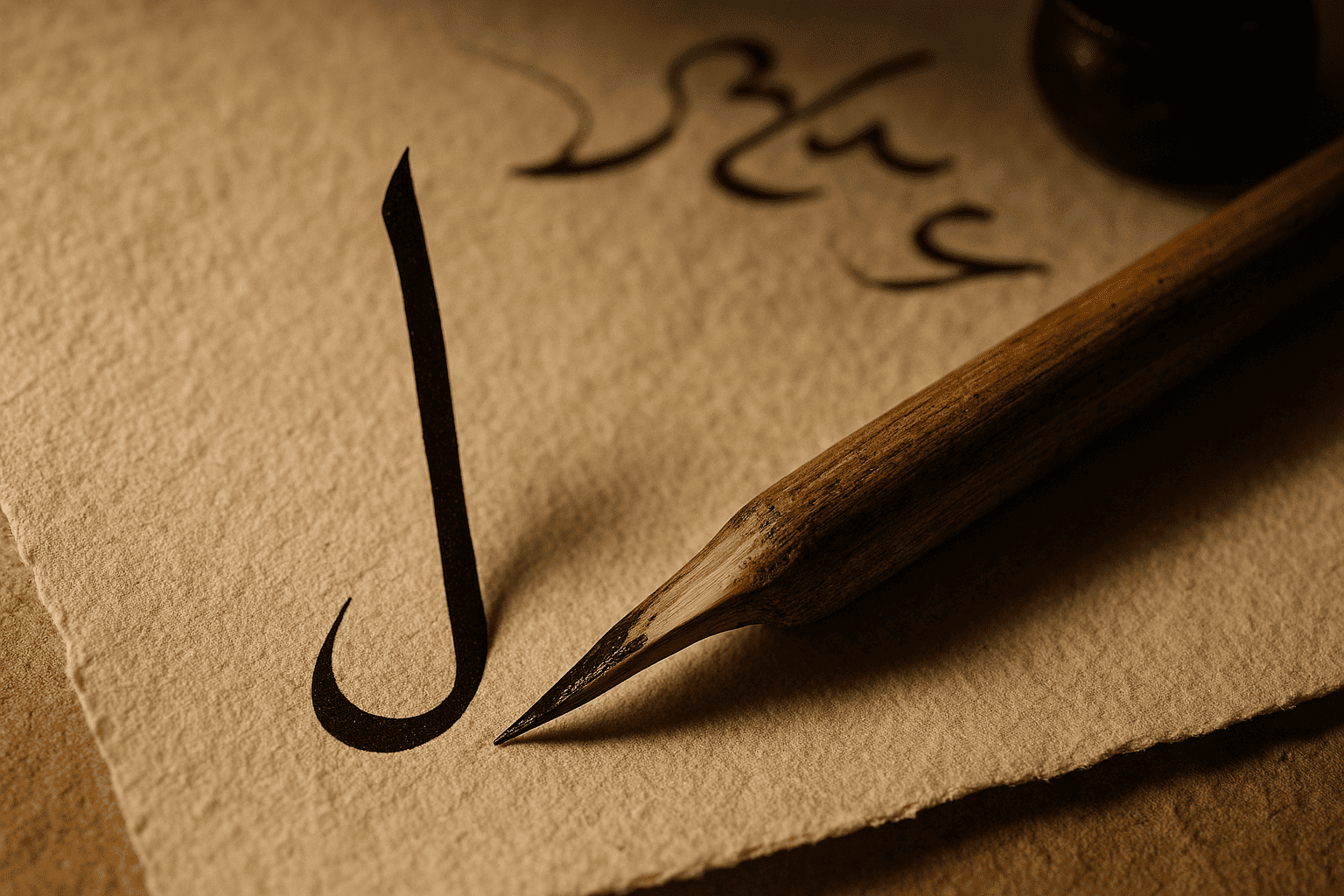
In an age defined by digital immediacy, the deliberate, sensorimotor act of forming letters by hand has transformed from a utilitarian skill into a potent therapeutic and contemplative practice. This article provides a comprehensive analysis of the psychological impacts of two distinct yet interrelated disciplines: the traditional art of Islamic calligraphy (Khatt) and the broader practice of contemplative writing. Moving beyond aesthetic appreciation, we explore how these practices function as mechanisms for cognitive restructuring, emotional regulation, and spiritual attunement. Drawing upon interdisciplinary research from neuropsychology, mindfulness-based therapies, art therapy, and cultural studies, we argue that the integration of focused attention, rhythmic movement, and symbolic engagement inherent in these acts can induce states of flow, mitigate stress, enhance metacognitive awareness, and foster a profound sense of meaning. The article details the unique psychological dimensions of Khatt, rooted in its spiritual and cosmological foundations, and contrasts and complements these with the mechanisms of secular contemplative writing practices like journaling, poetic writing, and mindful free-writing. We conclude that both disciplines offer validated pathways to mental well-being, serving as antidotes to the fragmentation of modern attention and as tools for integrative self-discovery.
Introduction: The Lost Rhythm of the Hand
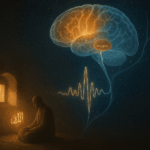
The click-clack of keyboards and the silent tap of touchscreens have largely supplanted the scratch of pen on paper. This shift is not merely technological but neurological and psychological. Handwriting, an invention foundational to human civilization, engages the brain in a complex symphony of motor control, visual processing, and cognitive formulation. Its deliberate, artistic forms—calligraphy—and its introspective, process-oriented applications—contemplative writing—have emerged in clinical and wellness contexts as powerful modalities for healing and growth.
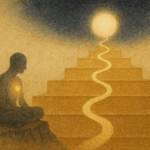
This article posits that the psychological power of Khatt and contemplative writing stems from their tripartite engagement of the human psyche: through the body (kinetic, sensory experience), the mind (focused attention and symbolic processing), and, particularly in Khatt, the spirit (connection to tradition and transcendent meaning). We will dissect these layers, providing evidence for their impacts on stress, anxiety, attention, emotional processing, and self-concept. While contemplative writing is often explored in Western therapeutic contexts, the inclusion of Khatt offers a vital cross-cultural perspective, highlighting how cultural and spiritual embeddedness deepens and particularizes the psychological experience.
1. The Neuropsychological Underpinnings of Handwriting
To understand the specific impacts of calligraphy and contemplative writing, one must first appreciate the basic neuroscience of handwriting itself.
1.1 The Sensorimotor Symphony
Writing by hand is a fine-motor skill of remarkable complexity. It requires the integration of the prefrontal cortex (planning, decision-making), the premotor and motor cortices (movement execution), the somatosensory cortex (feedback from pen pressure and grip), and the visual cortex (tracking letterforms). This multi-sensory activation creates a richer neural signature than typing. Mueller & Oppenheimer (2014), in their seminal work, demonstrated that students who took longhand notes exhibited better conceptual understanding and memory retention than those who typed, a phenomenon they attributed to the deeper, generative processing required to summarize and form letters by hand. This “encoding hypothesis” suggests that the physical act of writing supports cognitive integration.
1.2 Inducing the Flow State
The psychologist Mihaly Csikszentmihalyi defined “flow” as an optimal state of consciousness where one becomes fully immersed, focused, and engaged in an activity, often losing a sense of time and self. The deliberate, paced nature of calligraphy—where every stroke width, angle, and spacing is considered—is a near-perfect recipe for inducing flow. It presents clear goals (forming the letter correctly), provides immediate feedback (the ink on the paper), and balances challenge with skill. Contemplative writing, when practiced with non-judgmental attention to the process of thought unfolding onto the page, can achieve a similar state. The flow state is intrinsically rewarding and is strongly associated with reduced anxiety, improved mood, and increased psychological resilience.
1.3 Mindfulness in Motion
Both calligraphy and contemplative writing are, at their core, mindfulness practices. Mindfulness, defined as paying attention to the present moment non-judgmentally, is a well-established psychological intervention for a host of conditions. The act of writing forces attention to the here and now: the feel of the paper, the flow of ink, the shape emerging from the nib. It anchors the practitioner in a single, continuous action, pulling them away from ruminative past or anxious future thinking. Kabat-Zinn (1990), the founder of Mindfulness-Based Stress Reduction (MBSR), established that focused attention on a present-moment activity can significantly lower cortisol levels and quiet the brain’s default mode network, associated with mind-wandering and self-referential thought. Calligraphy and contemplative writing operationalize this principle through structured, embodied action.
2. The Spiritual Geometry: Psychology of Islamic Calligraphy (Khatt)
Islamic calligraphy is not merely beautiful writing; it is a sacred art form governed by rigorous rules (proportions, rhythms) and imbued with theological significance. Its psychological impact is deeply intertwined with its spiritual and cultural context.
2.1 Discipline, Order, and Cognitive Quieting
The learning of Khatt begins with musawwit (preparation) and riyadah (spiritual exercise). The student must master the qalam (reed pen), ink grinding, and the fundamental proportions of the alif—the vertical stroke from which all other letters in the Arabic script derive their measurements. This initial phase is one of supreme discipline. The mind, forced to concentrate on geometric precision and manual control, is systematically emptied of clutter. The chaotic “cognitive noise” of everyday worry is replaced by the singular task of executing a perfect curve. This mirrors exposure and response prevention therapies for anxiety, where a structured, demanding task disrupts habitual cycles of anxious thought. The ritualistic preparation itself—grinding the ink, preparing the paper—serves as a psychological transition into a sacred, focused space.
2.2 Contemplation of the Divine Word
The primary subject of Khatt is the Quranic verse. The calligrapher is not just writing text; they are visually manifesting the believed-to-be divine word. This adds a profound layer of meditative contemplation. As the artist forms the letters of “Allah” or “Bismillah,” their focus is dual: on the physical form and the spiritual meaning. This engages what psychologists might call “transcendent” or “self-transcendent” emotions—awe, reverence, and a connection to something larger than the self. Research by Keltner & Haidt (2003) has shown that experiences of awe can diminish the ego, reduce stress, and increase feelings of connectedness. The practice of Khatt, therefore, becomes a vehicle for cultivating these beneficial emotional states through embodied spiritual reverence.
2.3 Symbolism, Archetype, and the Unconscious
The Arabic script, with its flowing baselines and ascending verticals, is often described as having a “breathing rhythm.” Letters are seen as living entities. In Sufi traditions, the shapes of letters hold esoteric meanings—the alif representing the uprightness of God’s oneness, the nun (ن) bowl symbolizing the vessel of reception. Engaging with these forms at a deep, repetitive level allows for a non-verbal dialogue with symbolic and archetypal content within the psyche, akin to the processes observed in Jungian art therapy. The act becomes a form of active imagination, where the disciplined hand gives form to spiritual and psychological intuitions, potentially facilitating integration and insight.
3. The Unfurling Self: Psychology of Contemplative Writing
Contemplative writing shifts the emphasis from the external form of the letter to the internal content of the mind and heart, using the writing process itself as the object of mindfulness and investigation.
3.1 Expressive Writing and Emotional Regulation
The paradigm of Expressive Writing, pioneered by Pennebaker (1997), provides robust empirical grounding. In his classic studies, participants wrote about deeply personal and traumatic experiences for 15-20 minutes over consecutive days. Results consistently showed long-term improvements in physical health, immune function, and psychological well-being compared to controls who wrote about superficial topics. Pennebaker’s analysis suggests that writing translates chaotic, emotional experiences into structured narrative. This act of linguistic labeling and narrative construction moves the experience from the right hemisphere’s (emotional, non-verbal) domain to the left hemisphere’s (analytical, linguistic) domain, facilitating cognitive processing and integration. The story becomes manageable, and the writer gains a sense of agency and coherence.
3.2 Mindfulness-Based Writing Practices
Techniques like “writing meditation,” where one writes continuously with a soft, non-judgmental focus on the arising of thoughts and sensations, marry mindfulness with expressive writing. The goal is not a polished product but awareness of the process of thinking. This practice cultivates metacognition—the ability to observe one’s own thoughts without immediate identification. A practitioner learns to see anxious or depressive thoughts as passing mental events, not absolute truths. This is a core mechanism in Mindfulness-Based Cognitive Therapy (MBCT) for preventing depressive relapse, as outlined by Segal, Williams, & Teasdale (2002). The pen becomes a tool for “decentering,” creating a healthy psychological distance from distressing mental content.
3.3 Journaling, Reflection, and the Integrated Self
Beyond trauma processing, structured journaling practices like gratitude journals, reflective journals, and autobiographical writing foster self-concept clarity and meaning-making. Writing about daily positive events amplifies and prolongs their emotional benefit through the mechanism of savoring. Reflective writing on challenges or decisions engages the prefrontal cortex in constructive problem-solving, often revealing solutions that remain elusive in cyclical mental worrying. Over time, these practices build a coherent autobiographical narrative, which developmental psychologist Dan McAdams identifies as central to a sense of identity and purpose. The journal becomes a mirror and a map, reflecting the inner world and charting a course through it.
4. Comparative Synthesis and Integrative Model
While Khatt and contemplative writing spring from different philosophical wells—one theocentric and tradition-bound, the other often secular and individually focused—their psychological mechanisms converge and complement.
4.1 Convergence: The Pathway to Presence
Both are anchoring practices. Khatt anchors through external geometric discipline and sacred text; contemplative writing anchors through internal observation and linguistic flow. Both induce flow states through balanced challenge. Both serve as emotional regulators: Khatt by quieting the mind through disciplined focus and awe; expressive writing by venting and restructuring emotional content. Both enhance attentional control by training the mind to sustain focus on a single, continuous process.
4.2 Divergence: Orientation of Attention
The primary divergence lies in the orientation of attention. In Khatt, attention is directed outward toward a canonical, perfect form. The self ideally effaces itself in service of the tradition and the divine word. The psychological outcome is often humility, connection to a community and history, and transcendence. In much contemplative writing, attention is directed inward toward the personal, the subjective, and the autobiographical. The self is the subject of investigation. The outcome is often self-knowledge, individuation, and personal coherence.
4.3 An Integrative Model: The Calligraphy of the Self
We can propose an integrative model where these practices form a spectrum of psychological work. At one end, Khatt emphasizes structure, tradition, and transcendence. It is a practice of receiving and incarnating external, established meaning. At the other end, expressive writing emphasizes expression, individuality, and immanence. It is a practice of excavating and articulating internal, personal meaning. In the middle lies mindfulness-based writing, which focuses purely on the process itself, observing the interplay of internal and external without attachment to either product or profound personal revelation.
A holistic psychological practice could move fluidly along this spectrum. One might begin with the disciplined quieting of Khatt to calm cognitive chaos, then move to mindful free-writing to observe what arises in the quieted mind, and finally engage in reflective writing to integrate insights. This sequence mirrors therapeutic processes: establishing safety and regulation (Khatt), processing experience (mindful/expressive writing), and consolidating change (reflective writing).
5. Clinical and Practical Applications
The evidence for these practices has spurred their adoption in diverse settings.
5.1 In Clinical Therapy
- Art Therapy: Calligraphy is used in cross-cultural therapy settings, particularly with Muslim clients, as a culturally congruent medium for expression and stress reduction.
- Trauma Therapy: Expressive writing protocols are integrated into treatments for PTSD, helping clients process fragmented traumatic memories.
- Mindfulness Interventions: Mindfulness-based writing is a component in MBCT, Dialectical Behavior Therapy (DBT), and acceptance and commitment therapy (ACT) to develop observational skills and value clarification.
5.2 In Educational Settings
- Learning Support: Teaching cursive or basic calligraphy can improve children’s fine motor skills, cognitive development, and memory for letters.
- Student Well-being: Reflective journaling is used to reduce exam anxiety and enhance metacognitive skills in learning.
5.3 In Community and Personal Wellness
- Workshops: Calligraphy and therapeutic writing workshops are popular in wellness retreats, corporate well-being programs, and community centers.
- Personal Ritual: Individuals adopt these practices as daily rituals for self-care, spiritual connection, and creative expression, building resilience against the stressors of digital life.
Conclusion
In a world of ephemeral digital communication, the slow, deliberate act of putting pen to paper is a radical act of psychological and spiritual reclamation. Islamic calligraphy (Khatt) and contemplative writing, though distinct in origin, stand as twin testaments to the transformative power of this simple act. They demonstrate that writing is not merely communication; it is a technology of the self. Through the synchronized dance of hand, eye, and mind, they offer a pathway out of fragmentation into flow, out of distress into regulation, and out of confusion into meaning—whether that meaning is found in the sacred geometry of a divine word or the unfolding narrative of a personal life. The psychological impact is profound: a recalibration of attention, a sanctuary for emotion, and a dialog with the deepest layers of human experience. The pen, it seems, remains mightier than the sword not only in contesting ideas but in healing the mind that holds them.
SOURCES
Csikszentmihalyi, M. (1990). Flow: The Psychology of Optimal Experience. Harper & Row.
Kabat-Zinn, J. (1990). Full Catastrophe Living: Using the Wisdom of Your Body and Mind to Face Stress, Pain, and Illness. Delacorte.
Keltner, D., & Haidt, J. (2003). Approaching awe, a moral, spiritual, and aesthetic emotion. Cognition and Emotion, 17(2), 297–314.
Mueller, P. A., & Oppenheimer, D. M. (2014). The pen is mightier than the keyboard: Advantages of longhand over laptop note taking. Psychological Science, 25(6), 1159–1168.
Pennebaker, J. W. (1997). Writing about emotional experiences as a therapeutic process. Psychological Science, 8(3), 162–166.
Segal, Z. V., Williams, J. M. G., & Teasdale, J. D. (2002). Mindfulness-Based Cognitive Therapy for Depression: A New Approach to Preventing Relapse. Guilford Press.
Additional Recommended Readings:
Khatibi, A., & Sijelmassi, M. (1995). The Splendour of Islamic Calligraphy. Thames & Hudson.
McAdams, D. P. (2001). The psychology of life stories. Review of General Psychology, 5(2), 100–122.
Safadi, Y. H. (1978). Islamic Calligraphy. Thames & Hudson.
HISTORY
Current Version
Jan 5, 2026
Written By
SUMMIYAH MAHMOOD
Leave a Reply