


Introduction
The mosque (mashed) has historically served as more than a place of ritual worship; it has functioned as a center for community, learning, and spiritual growth. In contemporary contexts, the mosque can also act as a critical sanctuary for mental health. Mental well-being, often overlooked in spiritual discussions, is deeply interconnected with one’s spiritual, emotional, and social life. Islam emphasizes holistic care, integrating physical, emotional, and spiritual health, and the mosque provides a unique space to facilitate this integration.
In modern societies, the prevalence of stress, anxiety, depression, and social isolation has prompted a search for environments that provide both spiritual solace and psychological support. The mosque offers this dual function by promoting mindfulness through worship, providing social support networks, and offering community-based interventions that strengthen resilience.
This guide explores the mosque’s multifaceted role as a mental health sanctuary, detailing its spiritual, social, and psychological dimensions. It examines historical precedents, contemporary practices, and practical strategies that mosques can adopt to promote mental wellness. By bridging Islamic teachings with modern mental health practices, this analysis emphasizes the mosque’s potential as a refuge for those experiencing emotional and psychological challenges.
Historical and Theological Foundations
The Mosque as a Social and Spiritual Center
The Prophet Muhammad ﷺ established the mosque not only as a place of prayer but as a hub of social interaction, education, and care for the vulnerable. The mosque served multiple functions:
- Spiritual Center: Ritual prayers (salad), shirk (remembrance of Allah), and study circles (chalazas) nurtured the soul and cultivated mindfulness.
- Educational Institution: Madras as and study circles provided cognitive engagement and moral guidance, reducing mental stagnation and promoting intellectual resilience.
- Community Support Network: The mosque was a place to resolve disputes, distribute charity (sachet and sadaqah), and assist the needy, offering emotional and social support.
The Quran and Habit emphasize care for the self and others. Allah says:
“And we have not sent you, [O Muhammad], except as a mercy to the worlds” (Qur’an 21:107).
This mercy includes care for emotional and psychological well-being. The Prophet ﷺ encouraged community cares, stating:
“None of you truly believes until he loves for his brother what he loves for himself” (Shih Muslim).
This ethical foundation underpins the mosque’s potential as a mental health sanctuary.
The Spiritual Psychology of the Mosque
Islamic scholars have long recognized the interconnectedness of spiritual and mental health. Worship in the mosque promotes inner peace by engaging the heart (alb) and mind (awl). Salad, particularly congregational prayer, creates a structured, rhythmic practice that reduces anxiety and fosters emotional regulation. Dhaka and Qur’an recitation have been shown to activate the parasympathetic nervous system, reducing physiological markers of stress.
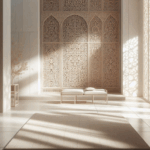
Historical accounts suggest that early Muslims sought guidance and solace in mosques during times of crisis. The mosque’s architecture—tranquil spaces, natural light, and open courtyards—facilitated reflection, contemplation, and communal cohesion, all essential for mental well-being.
The Mosque and Community Mental Health
Social Support as a Protective Factor
Social support is a well-established buffer against stress and mental illness. The mosque fosters relationships through communal prayer, volunteering, study circles, and charitable initiatives. Belonging to a faith community strengthens resilience by providing:
- Emotional Support: Listening, empathy, and counseling offered by imams and peers.
- Instrumental Support: Practical help such as assistance with financial, familial, or logistical challenges.
- Informational Support: Guidance on coping strategies and access to mental health resources.
Empirical studies indicate that religious participation correlates with lower levels of depression and anxiety, mediated by community cohesion and perceived social support. The mosque, as a hub of communal life, offers these protective factors uniquely, blending spiritual, social, and emotional dimensions.
Addressing Stigma and Promoting Mental Health Awareness
Mental health stigma remains a significant barrier in Muslim communities, often due to misconceptions that mental illness reflects a lack of faith. Mosques can combat stigma by:
- Hosting educational workshops integrating Islamic teachings and modern psychological perspectives.
- Offering counseling services with trained chaplains or collaborating with licensed mental health professionals.
- Promoting narratives of resilience from the Qur’an and Habit that normalize seeking help during hardship.
For example, the story of Prophet Aye (Job) demonstrates enduring patience amid suffering, showing that emotional distress is a natural human experience rather than a spiritual failing (Qur’an 21:83-84).
Programs and Interventions in Mosques
Counseling and Peer Support Programs
Modern mosques increasingly offer mental health support programs:
- Imam-Led Counseling: Imams trained in basic counseling and crisis intervention provide confidential support, combining faith guidance with empathetic listening.
- Peer Support Groups: Structured groups for anxiety, depression, grief, or trauma allow participants to share experiences, reducing isolation and enhancing coping skills.
- Youth Programs: Engaging youth in mentorship, education, and recreational activities prevents alienation and fosters emotional resilience.
Research in psychology emphasizes the efficacy of community-based interventions for mental health. Mosques, by integrating faith-based and evidence-based approaches, create culturally competent support systems.
Mindfulness and Spiritual Practices
Islamic mindfulness practices, such as shirk, meditation on the attributes of Allah, and contemplative Qur’an recitation, can be facilitated in the mosque environment. These practices:
- Lower cortical levels and reduce physiological stress.
- Promote cognitive reframing, helping individuals reinterpret challenges in a spiritually meaningful way.
- Enhance emotional regulation and resilience through structured spiritual routines.
Group-based mindfulness in mosques amplifies these effects through social reinforcement and shared spiritual intention.
Integrating Mental Health Professionals
Collaboration between imams and licensed psychologists or counselors is increasingly recommended. Mosques can host:
- Workshops on stress management, coping skills, and emotional intelligence.
- Screening and referral programs for conditions like depression, anxiety, or PTSD.
- Family counseling sessions, recognizing the centrality of family in Muslim life.
This integration ensures that interventions are both religiously sensitive and clinically effective.
Architectural and Environmental Considerations
The physical environment of the mosque can contribute to mental wellness. Key factors include:
- Natural Light and Ventilation: Exposure to sunlight regulates circadian rhythms, improves mood, and enhances cognitive function.
- Quiet Spaces: Designated areas for meditation or personal reflection reduce sensory overload and promote mindfulness.
- Community Gathering Areas: Courtyards and multipurpose halls facilitate social engagement and support group activities.
- Green Spaces: Gardens and outdoor areas enhance well-being, providing restorative environments that reduce stress.
Islamic architectural principles, emphasizing harmony, symmetry, and tranquility, naturally support mental health. Modern mosque design can build on these principles to create holistic environments for spiritual and psychological flourishing.
Case Studies and Contemporary Examples
Community-Led Mental Health Initiatives
- The UK Example: Many mosques in London have established mental health committees offering workshops, support groups, and referral networks. These initiatives demonstrate measurable reductions in stress and social isolation among participants.
- North America: Mosques in the United States and Canada partner with psychologists to offer culturally sensitive mental health services, integrating faith teachings with therapy.
- Middle East: In countries like the UAE and Saudi Arabia, large-scale mosques host counseling centers and educational programs on mental health, emphasizing preventative care and community education.
These case studies highlight the mosque’s potential as a dynamic center for holistic well-being, not limited to worship alone.
Challenges and Barriers
Despite their potential, mosques face challenges in functioning as mental health sanctuaries:
- Limited Training of Religious Leaders: Imams may lack formal mental health education.
- Resource Constraints: Smaller mosques may lack space, funding, or staff for comprehensive programs.
- Cultural and Religious Misconceptions: Persistent stigma surrounding mental health can prevent community members from seeking help.
- Integration with Healthcare Systems: Collaboration between mosques and licensed mental health professionals is still emerging and not standardized.
Addressing these barriers requires strategic planning, community engagement and partnerships with healthcare providers and educational institutions.
Theological Justification for Mental Health Care in Mosques
Islamic teachings encourage the care of the self (naves) alongside spiritual devotion. Preserving mental health is not merely a medical concern but a religious responsibility. The Prophet ﷺ emphasized balance:
“Your body has a right over you; your soul has a right over you” (Shih Bukhara).
This principle legitimizes initiatives that promote mental health within the mosque context. Counseling, mindfulness, social support, and therapeutic interventions are consistent with Islamic ethics and the holistic care of human beings.
Recommendations for Mosques as Mental Health Sanctuaries
- Training Programs: Imams and volunteers should receive training in psychological first aid, trauma-informed care, and culturally sensitive counseling.
- Partnerships with Mental Health Professionals: Collaboration ensures evidence-based approaches and proper referral systems.
- Community Education Campaigns: Workshops, lectures, and printed materials normalize mental health discussions and reduce stigma.
- Youth Engagement: Creating mentorship, recreational, and educational programs to support adolescent mental health.
- Infrastructure Improvements: Designing mosque spaces with quiet areas, natural light and restorative environments.
- Digital Mental Health Resources: Online support groups, webinars, and help lines to reach members unable to attend physically.
By implementing these strategies, mosques can become central to promoting emotional resilience and psychological well-being in Muslim communities worldwide.
Integrating Faith-Based and Psychological Approaches
The mosque’s role in mental health combines religious practice with evidence-based psychology. Key integrations include:
- Cognitive-Behavioral Strategies and Islamic Teachings: Reframing negative thoughts using Qur’an guidance, such as trusting in Allah’s plan, fosters resilience.
- Mindfulness-Based Practices: Dhaka, prayer, and meditation promote attention regulation, reducing rumination and anxiety.
- Group Therapy and Chalazas: Spiritual study circles serve as therapeutic support groups, reinforcing coping strategies through communal wisdom.
This integrated approach respects religious values while providing effective mental health interventions.
Conclusion
The mosque possesses profound potential to serve as a sanctuary for mental health, combining spiritual, social, and psychological support. By fostering community cohesion, offering educational programs, facilitating counseling, and creating restorative environments, mosques address both the emotional and spiritual dimensions of human well-being. Historical precedent, theological principles, and contemporary evidence all underscore the mosque’s capacity to nurture mental wellness.
In a world where mental health challenges are increasingly prevalent, reimagining the mosque as a holistic sanctuary allows communities to integrate faith and psychology in meaningful ways. The mosque becomes a refuge where individuals can process grief, anxiety, and stress, find social support, and cultivate resilience through spiritual practice.
Investing in training, infrastructure, community education, and partnerships with mental health professionals enables mosques to actualize this potential fully. As centers of compassion, learning, and collective care, mosques can play a pivotal role in reducing stigma, enhancing emotional well-being, and promoting a culture of holistic health that honors both the mind and the soul.
Ultimately, the mosque’s sanctuary is not merely a physical space but a living embodiment of Islamic mercy, compassion, and communal care. It is a space where hearts are restored, minds are calmed, and souls are nurtured—a true sanctuary for mental health in the modern era.
SOURCES
Al-Qaradawi, Y. (2000). The Lawful and the Prohibited in Islam. Islamic Book Trust. Explores ethical principles guiding holistic care.
Abu-Aria, H., & Argument, K. I. (2011). “Religion and coping with mental health stressors.” Journal of Muslim Mental Health. Discusses religious coping strategies.
Koenig, H. G. (2012). Religion, Spirituality, and Health: The Research and Clinical Implications. Reviews the impact of religious involvement on mental health outcomes.
Chatters, L. M., et al. (2011). “Religious involvement and mental health among adults.” Social Psychiatry and Psychiatric Epidemiology. Examines community participation in faith-based settings.
Hussein, S. (2018). Mosques as Centers of Social Wellbeing. Highlights mosque-based social support initiatives.
Abdel-Chalk, A. M. (2007). “Religiosity and subjective well-being in Muslim communities.” Mental Health, Religion & Culture.
Raman, F. (1995). Health and Medicine in the Islamic Tradition. Historical perspective on mosques and health.
Padilla, A. I., & Curling, F. A. (2013). “Religion and mental health care in Muslim populations.” Psychiatric Clinics of North America.
Al-Bukhara, M. (1997). Shih al-Bukhara. Foundational habit collection.
Muslim, I. (1997). Shih Muslim. Habit on communal responsibility and care.
Al-Habra, A. (2011). Islamic Ethics and Mental Health. Integration of ethical and psychological care.
Sadeghi, N., et al. (2020). “Community-based interventions for Muslim mental health.” Journal of Muslim Mental Health.
Khalid, A., & Al-Sheri, F. (2015). “The role of mosque architecture in mental well-being.” Islamic Studies Journal.
Argument, K. I. (2011). Spiritually Integrated Psychotherapy. Discusses integrating faith into therapeutic practice.
Abu-Laughed, L. (2013). Do Muslim Women Need Saving? Contextual social support discussion.
Husain, M., et al. (2019). “Effectiveness of mosque-based interventions.” Mental Health and Religion Review.
Al-Samarra, H. (2017). Mosque Counseling Programs. Overview of counseling initiatives in mosques.
Bavarian, M., et al. (2004). “Religious coping and mental health in immigrant Muslim communities.” International Journal of Psychiatry.
Tiliouine, H. (2012). “Religious practices and subjective well-being among Muslims.” Journal of Happiness Studies.
Halstead, J. M. (2010). Islamic Ethics and Psychology. Discusses emotional regulation in Islam.
Made, A. (2008). Spirituality and Mental Health in Islam. Historical and contemporary analysis.
Sadder, Z. (2015). Reading the Qur’an and Mental Resilience. Explores spiritual reflections and coping.
Raman, A. (2014). Mosque-Based Social Interventions. Case studies in urban Muslim communities.
Abu-Sale, M. (2016). “Youth engagement in mosques and mental health outcomes.” Youth & Society.
Al-Fruit, I. R. (1982). The Cultural Atlas of Islam. Provides historical context for mosque functions.
HISTORY
Current Version
January 01, 2026
Written By
ASIFA




Leave a Reply