

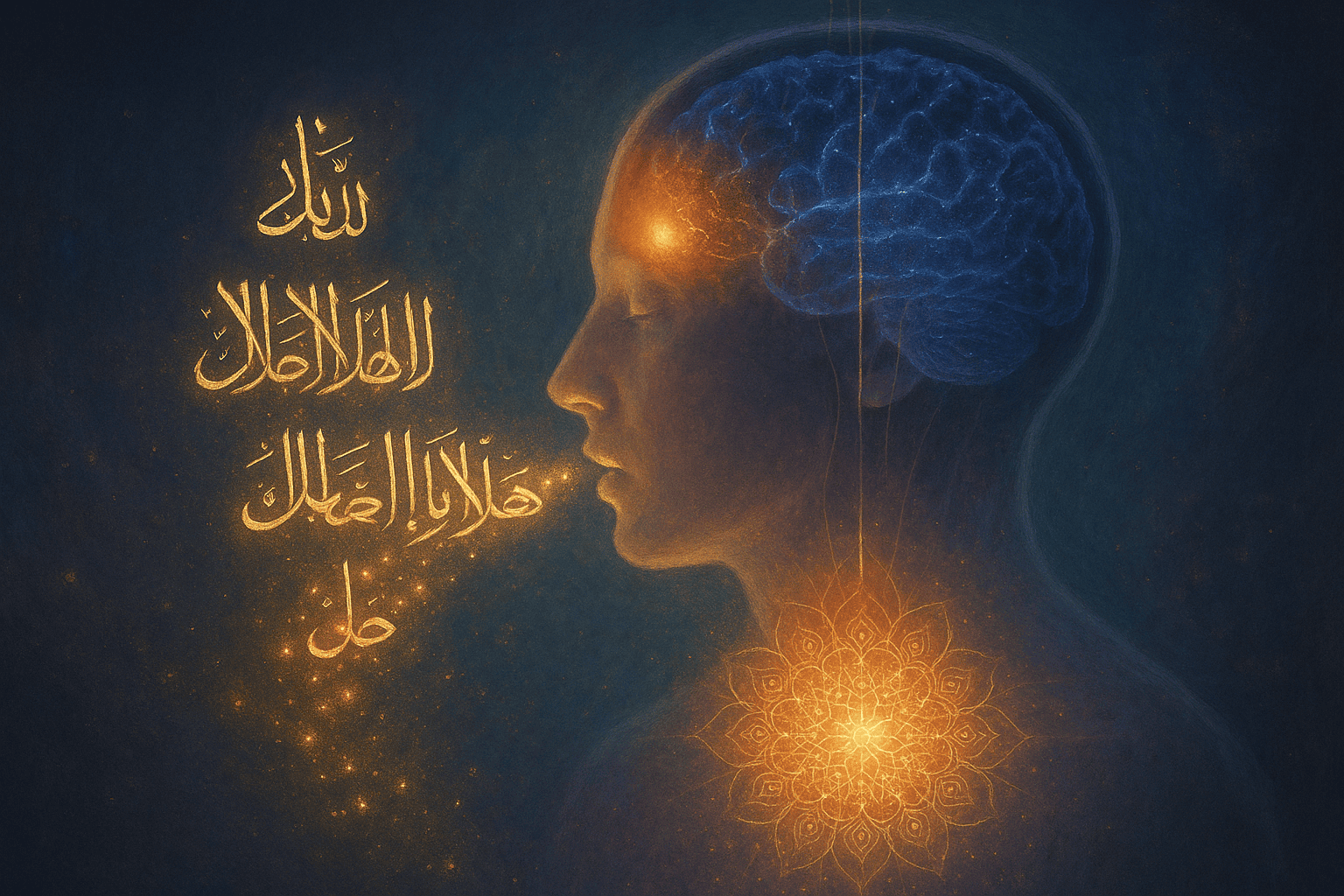
The Islamic practice of dhikr (remembrance of God) serves as the central axis of Sufi spirituality and a recommended act for all Muslims. Within its taxonomy, a critical distinction is made between dhikr al-lisān (remembrance of the tongue) and dhikr al-qalb (remembrance of the heart). This article explores the theological, phenomenological, and experiential depths that distinguish these two modes of remembrance, arguing that dhikr al-qalb represents an internalization and intensification of consciousness aimed at perpetual God-awareness. Furthermore, it examines emerging neuroscientific correlations that may provide a biological lens through which to understand the states elicited by sustained dhikr, particularly the silent, heart-centered form. By synthesizing classical Islamic texts with contemporary neuroimaging studies on meditation and prayer, this paper posits that the journey from lisān to qalb mirrors a neurological shift from focused attention to effortless presence, potentially underpinning the transformative states described by mystics for centuries.
Introduction
Dhikr, derived from the Arabic root dh-k-r meaning to remember, mention, and invoke, is far more than ritualistic recitation. The Quran repeatedly commands the faithful to engage in dhikr: “O you who have believed, remember Allah with much remembrance” (Quran 33:41). In responding to this injunction, Islamic spirituality delineates a gradation of practice, beginning with the tongue and culminating in the heart. Al-Ghazali (2011), in his magnum opus Iḥyā′ ‘Ulūm al-Dīn (The Revival of the Religious Sciences), meticulously describes this progression. Dhikr al-lisān is the verbal, articulated remembrance, accessible to all. Dhikr al-qalb, however, is where the words descend from the lips to permeate the core of one’s being, becoming a self-sustaining state of awareness.
This article will first delineate the classical understanding of both forms of dhikr, drawing from key Sufi and theological sources. It will then analyze the phenomenological depth associated with dhikr al-qalb, exploring its described outcomes of intimacy (uns), annihilation (fanā′), and subsistence (baqā′). The final section will engage with modern neuroscience, reviewing studies on focused repetition, default mode network (DMN) activity, and heart-brain coherence to propose correlations with the states induced by sustained dhikr. The central thesis is that the distinction between lisān and qalb is not merely symbolic but reflects a profound shift in cognitive and affective processing, one that may be increasingly visible through the lens of modern science.
Part I: The Classical Framework – From Tongue to Heart
1.1 Dhikr al-Lisān: The Gateway of the Tongue
Dhikr al-lisān is the foundational, verbal practice. It involves the conscious, deliberate recitation of divine names, Quranic phrases, or litanies (awrād). Common formulae include “Lā ilāha illā Allāh” (There is no god but God), “Subḥān Allāh” (Glory be to God), and “Allāhu Akbar” (God is Greatest). Its functions are multifold:
- Disciplining the Roving Mind: It serves as an anchor, drawing the practitioner away from distracted thoughts (khaṭarāt). Ibn ‘Aṭā′illāh al-Iskandarī (2018) notes in his Ḥikam (Aphorisms) that the tongue’s remembrance is a means to ignite the heart’s remembrance.
- Cultivating Habitual Awareness: Through repetition, it etches the reality of the Divine into the conscious mind.
- Community and Liturgical Practice: It forms the basis of communal worship and congregational dhikr circles.
However, classical scholars warn of its potential pitfalls. If performed mechanically, without presence of mind (ḥuḍūr al-qalb), it can become a hollow ritual. Al-Ghazali (2011) compares the tongue moving without the heart’s engagement to a “windmill turning without grinding any grain”—a motion without substance. Thus, dhikr al-lisān is essential but preliminary; its ultimate purpose is to act as a vehicle for a deeper, internal transformation.
1.2 Dhikr al-Qalb: The Immersion of the Heart
In Islamic epistemology, the qalb is not merely the physical organ nor the seat of transient emotions as often conceived in the modern West. It is the spiritual locus of intellect, understanding, and transcendent consciousness—the center of true perception (baṣīra). Dhikr al-qalb, therefore, is the unceasing, autonomous remembrance that arises from this center.
This state is characterized by several key features:
- Internalization and Automation: The phrases of dhikr cease to be voluntarily uttered and begin to repeat spontaneously within the heart, as if by the heart’s own volition. Al-Ghazali (2011) describes it as the heart “beating” with the rhythm of remembrance.
- Perpetual Awareness (Ḥuḍūr Dā’im): It evolves from an act done at specific times to a persistent state of being. The practitioner becomes aware of God as a constant, living presence, coloring all perceptions and thoughts. This is the realization of the Prophetic supplication: “Make Your remembrance my life” (Ibn Ḥanbal, Musnad).
- Uninterrupted by Worldly Engagements: Unlike verbal dhikr, which stops when one speaks, eats, or sleeps, dhikr al-qalb is said to continue seamlessly beneath the surface of mundane activity. The 13th-century Persian poet Rumi (2004) metaphorically captures this in his Masnavi, describing the lover whose remembrance of the Beloved continues even while engaged in conversation with others.
- The Unitive Dimension: At its apex, dhikr al-qalb can lead to states where the distinction between the rememberer and the Remembered becomes blurred. This is the domain of fanā′ (annihilation in God) and baqā′ (subsistence through God), where the heart becomes a mirror purely reflecting the Divine attributes.
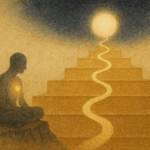
The journey from lisān to qalb is thus a journey of interiorization, from external performance to internal reality, from intermittent action to continuous state.
Part II: The Phenomenological Depth of Heart-Centered Dhikr
The superiority of dhikr al-qalb in the mystical tradition is attributed to its profound transformative effects on the human psyche and soul. These effects, described phenomenologically for centuries, suggest a comprehensive restructuring of consciousness.
2.1 Purification (Tazkiyat al-Qalb) and Illumination
The Quran states, “Indeed, in the remembrance of Allah do hearts find rest” (13:28). Classical exegetes argue this “rest” (ṭ-m-′n) is specifically tied to the heart’s remembrance. Ibn Qayyim al-Jawziyya (2010) in his Madārij al-Sālikīn (The Stations of the Seekers) elaborates that dhikr acts as a polish for the heart, removing the rust of negligence, sin, and worldly attachment. As the heart is purified through persistent, heartfelt remembrance, it becomes increasingly receptive to spiritual knowledge (ma‘rifa) and divine light (nūr). This illumination is described as a form of direct, intuitive knowing that transcends discursive reasoning.
2.2 The Annihilation of the Egoic Self
A core outcome of advanced dhikr al-qalb is the dissolution of the self-centered, commanding ego (nafs al-ammāra). The constant repetition of a phrase like “Lā ilāha illā Allāh” acts as a spiritual algorithm. With the heart as the processor, it systematically deconstructs all false objects of worship (idols of the heart: pride, greed, fame) until only the Divine Reality remains. Ibn ‘Aṭā′illāh (2018) states, “The dhikr that is truly free from forgetfulness is that which you find in the heart against your will.” This indicates a stage where the practice has moved beyond the ego’s control, actively undermining the ego’s hegemony.
2.3 Emotional and Ethical Transformation
The heart immersed in dhikr is said to generate states (aḥwāl) such as love (maḥabba), longing (shawq), intimacy (uns), and awe (khashya). These are not fleeting emotions but enduring qualities that reshape character (akhlāq). A heart perpetually aware of God’s presence naturally inclines towards patience, gratitude, compassion, and truthfulness, as these are reflections of the Divine Names remembered (e.g., Al-Ṣabūr, Al-Shakūr, Al-Raḥīm, Al-Ḥaqq).
Part III: Neurological Correlations – A Scientific Lens on an Ancient Practice
While neuroscience cannot measure the spiritual validity or divine acceptance of dhikr, it can observe the effects of focused, repetitive spiritual practice on brain structure, function, and psychophysiology. The journey from lisān to qalb may correlate with identifiable neurological shifts.
3.1 The Tongue’s Dhikr: Focused Attention and Cognitive Control
Verbal, repetitive dhikr shares characteristics with forms of focused attention (FA) meditation. Neuroimaging studies on mantra repetition (a close analogue to dhikr al-lisān) show consistent activation in a fronto-parietal network associated with cognitive control and attention. Brefczynski-Lewis et al. (2007), in a study on focused attention in meditation, found increased activation in the dorsolateral prefrontal cortex (dlPFC) and anterior cingulate cortex (ACC)—regions critical for maintaining focus and detecting distractions. This aligns with the initial stage of dhikr, where the practitioner must effortfully direct attention back to the sacred phrase, battling intrusive thoughts. The tongue’s movement and auditory feedback also engage the sensorimotor and auditory cortices, providing a multisensory anchor.
3.2 The Heart’s Dhikr: Default Mode Network (DMN) Modulation and Effortless Awareness
The state of dhikr al-qalb—characterized by self-sustaining, effortless awareness—bears stronger resemblance to advanced stages of meditation described as “open monitoring” or “automatic self-transcending.” A key neurological correlate here is the modulation of the Default Mode Network (DMN).
The DMN (including the medial prefrontal cortex, posterior cingulate cortex, and angular gyri) is active during mind-wandering, self-referential thinking, and autobiographical projection—the neural substrate of the egoic, narrative self. Brewer et al. (2011) demonstrated that experienced meditators show significant deactivation of the DMN during meditation. This deactivation correlates with subjective reports of reduced self-referential thinking and a loss of sense of time and space—phenomena strikingly similar to descriptions of fanā′.
It is plausible that the journey from lisān to qalb involves a transition from a high-cognitive-control state (suppressing DMN activity via the dlPFC) to a state where the DMN itself becomes quiescent or reorganized, leading to the experience of ego-dissolution and pervasive peace. The feeling of the dhikr “moving by itself” in the heart could correlate with a shift from deliberate, top-down neural processing to a bottom-up, spontaneous pattern generated in deeper, subcortical regions.
3.3 The Heart-Brain Axis and Coherence
The term “heart” in dhikr al-qalb is metaphysical, but intriguing parallels exist in the neurocardiac field. The heart has its own complex intrinsic nervous system (“the heart-brain”) and communicates bidirectionally with the cranial brain. Research by the HeartMath Institute (McCraty, 2015) has shown that cultivating sustained positive emotions (like love and gratitude) can induce a physiological state called “heart coherence,” where heart rate variability (HRV) becomes smooth and ordered. This coherent state facilitates cortical function and emotional stability.
Sustained, loving dhikr (especially of names like Al-Wadūd, The Loving) likely induces high levels of heart coherence. This provides a potential biophysical basis for the “rest” (ṭum′ānīna) described in the Quran. The heart is not merely a metaphor but an integral part of a dynamic system; its rhythmic, coherent state during deep dhikr may support the brain states associated with tranquility and expanded awareness.
3.4 Neuroplasticity and Long-Term Transformation
Long-term practitioners of meditation show structural brain changes, a phenomenon known as neuroplasticity. Lazar et al. (2005) found increased cortical thickness in brain regions associated with attention and sensory processing in experienced meditators. It is reasonable to hypothesize that decades of daily dhikr, particularly the immersive qalb form, would lead to similar strengthening of neural pathways for attention, emotional regulation, and self-transcendence, while potentially weakening pathways associated with anxiety, rumination, and aggression. This physical change in the brain’s architecture could underpin the permanent transformation of character (tahdhīb al-akhlāq) sought by the mystics.
Conclusion
The distinction between dhikr al-lisān and dhikr al-qalb represents one of the most sophisticated maps of spiritual development within the Islamic tradition. It charts a course from exteriority to interiority, from effort to grace, and from episodic ritual to unbroken consciousness. Dhikr al-lisān is the indispensable method, the kindling that starts the fire. Dhikr al-qalb is the fire itself—a self-sustaining, transformative blaze that purifies the inner chamber of the heart.
Emerging neuroscience, while operating in a different paradigm and with different goals, offers fascinating points of correlation. The shift from the focused-attention network activation of verbal dhikr to the DMN deactivation associated with effortless presence provides a potential neural signature for the transition from lisān to qalb. The study of heart-brain coherence further grounds the mystical “heart” in a plausible biophysical framework. These scientific insights do not explain away the spiritual reality but rather reveal the profound psychosomatic unity of the human being that the spiritual masters have always worked with. The heart that finds rest in God’s remembrance may indeed be reflected in a brain with a quieted default mode and a heart producing a coherent rhythm.
Ultimately, the practice of dhikr, in its journey from tongue to heart, remains an invitation to verify these truths through direct experience. As the Sufi saying goes, “Whoever tastes, knows.” The neurological correlations are but faint echoes of the silent symphony played in the heart of the true rememberer—a symphony whose conductor is the Divine, and whose music is unending peace.
SOURCES
Al-Ghazali, A. H. (2011). Iḥyā′ ‘Ulūm al-Dīn (The Revival of the Religious Sciences). (M. H. Farāhī, Trans.). Dar ul Ishaat.
Brefczynski-Lewis, J. A., Lutz, A., Schaefer, H. S., Levinson, D. B., & Davidson, R. J. (2007). Neural correlates of attentional expertise in long-term meditation practitioners. Proceedings of the National Academy of Sciences, 104(27), 11483–11488.
Brewer, J. A., Worhunsky, P. D., Gray, J. R., Tang, Y.-Y., Weber, J., & Kober, H. (2011). Meditation experience is associated with differences in default mode network activity and connectivity. Proceedings of the National Academy of Sciences, 108(50), 20254–20259.
HeartMath Institute. (n.d.). Science of the Heart. Retrieved from https://www.heartmath.org/research/science-of-the-heart/
Ibn ‘Aṭā′illāh al-Iskandarī. (2018). The Book of Aphorisms (Kitāb al-Ḥikam). (V. Danner, Trans.). Islamic Book Trust.
Ibn Qayyim al-Jawziyya. (2010). Madārij al-Sālikīn (The Stations of the Seekers). Darussalam.
Lazar, S. W., Kerr, C. E., Wasserman, R. H., Gray, J. R., Greve, D. N., Treadway, M. T., … & Fischl, B. (2005). Meditation experience is associated with increased cortical thickness. Neuroreport, 16(17), 1893–1897.
McCraty, R. (2015). Science of the Heart: Exploring the Role of the Heart in Human Performance (Vol. 2). HeartMath Institute.
Rumi, J. al-D. (2004). The Masnavi: Book One. (J. Mojaddedi, Trans.). Oxford University Press.
The Holy Quran. (English translation referenced: Sahih International).
HISTORY
Current Version
Jan 7, 2026
Written By
SUMMIYAH MAHMOOD

Leave a Reply