

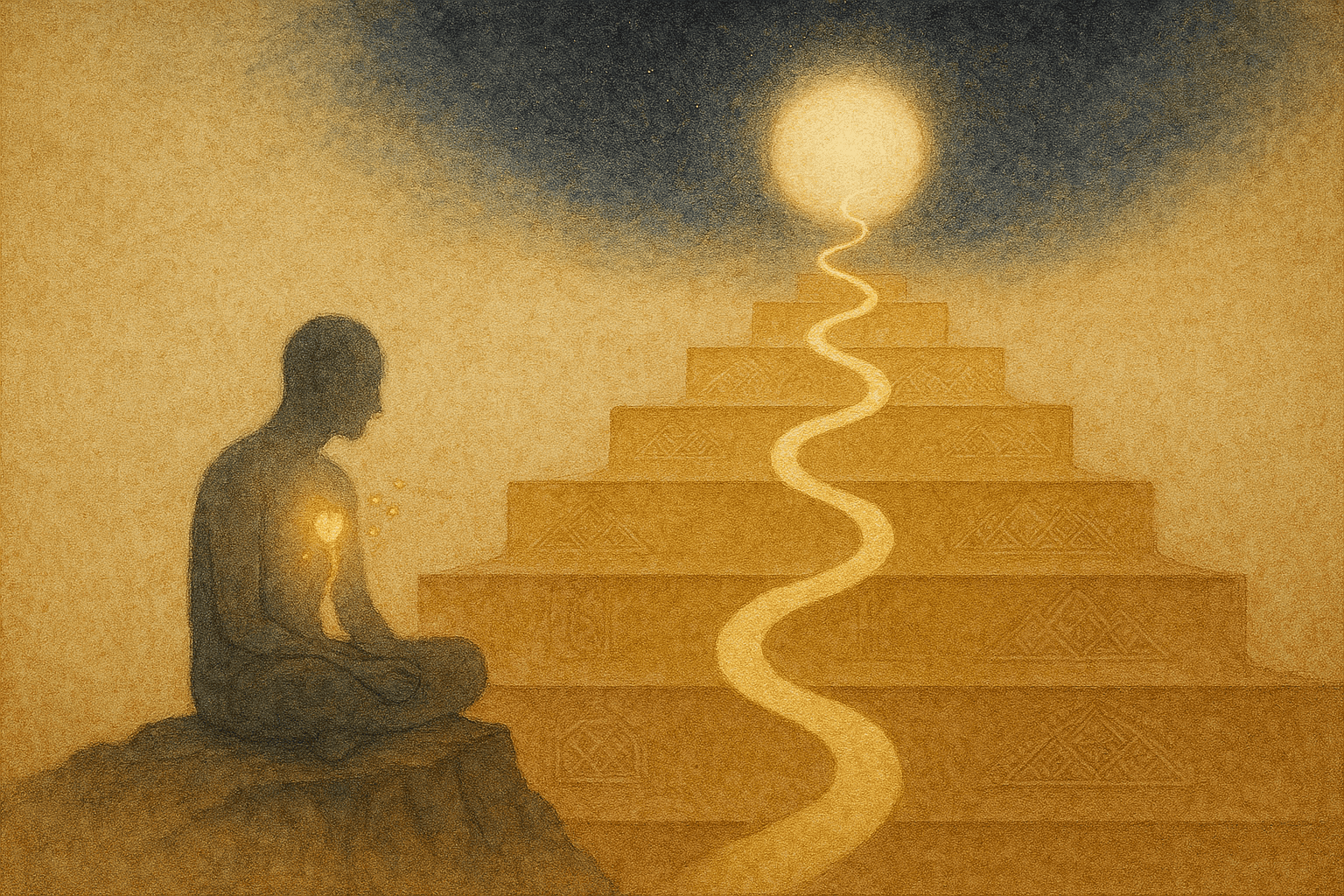
This article explores the classical Sufi psycho-spiritual framework of ahwal (transient states) and maqamat (enduring stations) as a nuanced and transformative model for holistic emotional development. Moving beyond contemporary, often secularized, models of emotional intelligence, the Sufi path offers a structured yet dynamic cartography for navigating the inner landscape. It posits that emotional maturity is not merely a psychological achievement but an ontological process intertwined with ethical purification and transcendental awareness. By examining key stations like repentance, patience, gratitude, and love, and states such as intimacy and awe, this analysis reveals how the Sufi tradition provides a rigorous discipline for transforming base emotions into refined qualities of being, ultimately aiming for the dissolution of the egoic self. The article argues for the relevance of this ancient system in addressing modern emotional fragmentation, presenting it as a comprehensive map for those seeking profound inner integration.
Introduction: The Crisis of Emotional Fragmentation and the Search for a Map
In an age characterized by unprecedented access to psychological knowledge and therapeutic modalities, a paradox persists: widespread emotional fragmentation, anxiety, and a sense of existential disorientation. Contemporary models of emotional development, from Daniel Goleman’s Emotional Intelligence to the framework of positive psychology, offer valuable tools for recognition and regulation. However, they often operate within a secular, utilitarian paradigm, aiming primarily at functional well-being and social efficacy. There remains a yearning for a deeper, more integrative map—one that connects emotional life to existential purpose, ethical substance, and transcendental meaning.
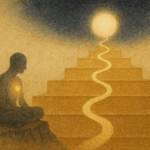
It is within this context that the ancient psycho-spiritual discipline of Sufism, the mystical heart of Islam, presents a compelling alternative. For over a millennium, Sufi masters (shaykhs) have guided disciples along a path (tariqa) toward Divine proximity, utilizing a sophisticated inner science. Central to this science is the distinction and interplay between maqamat (stations) and ahwal (states). As Schimmel (1975) elucidates, maqamat are spiritual stations “which the wayfarer can and must reach by his own effort,” through sustained practice, discipline, and striving. They represent acquired, stable stages of ethical and spiritual development. In contrast, ahwal (states) are divine gifts, “bestowed upon the heart without personal effort,” fleeting experiences of grace that descend upon the seeker, such as overwhelming joy, awe, or intimacy (p. 99).
This article proposes that this dual structure offers a profound map for emotional development. It reframes emotional growth not as a linear progression toward happiness, but as an arduous yet liberating journey of tazkiyah (purification of the self). The path systematically engages with the raw material of human emotion—fear, anger, sadness, desire, love—transmuting them through spiritual practice and divine grace into their perfected forms: God-conscious fear becomes reverence, anger becomes righteous indignation against one’s own faults, passionate love becomes unconditional devotion.
The Foundational Architecture: Stations (Maqamat) as Acquired Foundations
The maqamat constitute the backbone of the path, the sequential stages the seeker must diligently cultivate. Each station represents a consolidation of a particular ethical-emotional posture, building upon the previous one. They are the fruits of sustained practice (mujahada).
1. Repentance (Tawba): The Emotional Pivot Point
The journey begins not with optimism, but with an honest, emotionally charged confrontation with the self. Tawba is far more than guilt; it is a profound “turning” from dispersion toward unity. As Al-Ghazali (circa 1107/1997) describes in his Ihya Ulum al-Din, true repentance involves remorse for the past, cessation in the present, and firm resolve for the future (Book 4). Emotionally, this requires courage to face one’s shadows and the vulnerability to acknowledge brokenness. This initiates emotional development by breaking patterns of denial and justification, establishing a foundation of humility and honesty—the essential soil for all subsequent growth. Without this initial cathartic reorientation, emotional growth risks becoming a form of narcissistic self-improvement.
2. Patience (Sabr): The Alchemy of Emotional Endurance
Following repentance, the seeker encounters inevitable trials. Sabr is the station that trains the individual to hold difficult emotions—grief, frustration, longing, pain—without being shattered or compelled into reactive behavior. It is not stoic suppression but a dynamic “containment” that allows for conscious processing. Ibn Qayyim al-Jawziyya (circa 1350/1997) wrote extensively on sabr, identifying it as the pillar of faith. He distinguished between patience in obedience, patience in avoiding sin, and patience in the face of divine decree. Emotionally, sabr cultivates resilience, emotional stamina, and the capacity to delay gratification. It transforms the emotional experience of hardship from one of victimhood to one of potential purification and strength, a concept deeply resonant with modern trauma-informed and resilience theories.
3. Gratitude (Shukr): The Reconfiguration of Perception
If sabr deals with life’s thorns, shukr is the station for receiving its roses—and recognizing the roses hidden within thorns. Gratitude here is a constant attitude of the heart, a recognition that all phenomena are manifestations of a single, ultimate Source. This involves a cognitive-emotional reframing of every experience. Al-Ghazali (circa 1107/1997) argues that true gratitude involves knowledge (recognizing the blessing), state (feeling happiness from it), and action (using the blessing in ways pleasing to the Giver). Emotionally, shukr systematically counters entitlement, resentment, and envy. It fosters contentment (rida) and joy, not as dependent on external circumstances, but as an inner orientation. In developmental terms, it is the cultivation of positive emotional attractors that reshape the brain’s neural pathways toward appreciation.
4. Love (Mahabbah) and Yearning (Ishq): The Culmination of Emotional Transformation
The station of love represents the pinnacle of the emotional transmutation process. Initial love for the Divine, born from gratitude for blessings, deepens into a consuming passion (ishq) and longing (shawq). This love reorders all earthly affections; relationships and beauties of the world become mirrors reflecting the Divine Beloved. The great Persian poet and theorist Al-Qushayri (circa 1072/2007) dedicates a lengthy section in his Epistle (Al-Risala al-Qushayriyya) to mahabbah, describing it as the fire that burns away all other concerns. Emotionally, this station entails a radical decentering of the ego. Jealousy, possessiveness, and conditional affection are burned away in this fire, replaced by a selfless, generous, and encompassing love. It represents the ultimate integration of the emotional faculty, where emotion is no longer a chaotic reaction but a purified force drawing the individual toward unity.
The Transformative Gusts: States (Ahwal) as Gifts of Grace
While the seeker labors through the stations, they may be visited by ahwal. These states are not earned but bestowed, offering glimpses of the ultimate goal. They provide the motivational fuel to continue the arduous journey.
1. Intimacy (Uns): The State of Emotional Solace
In the midst of the struggle of sabr, a state of uns (intimate familiarity) may descend, where the feeling of Divine presence becomes palpable and comforting. The alienation inherent in the human condition momentarily dissolves. Emotionally, this alleviates anxiety, loneliness, and the fear of abandonment, providing a direct experience of secure attachment at the most fundamental level.
2. Awe (Haybah) and Expansion (Inbisat): The Polarity of Emotional Experience
Sufis often describe complementary states: haybah (awe-inspiring fear) and inbisat (expansive joy). Al-Qushayri (circa 1072/2007) notes their interdependence. Haybah is the overwhelming emotion in the face of Divine Majesty (Jalal), while inbisat is the heart’s expansion in the experience of Divine Beauty (Jamal). Emotionally, this duality teaches the seeker to hold and integrate the full spectrum of human feeling—from the tremulous reverence of a tiny creature to the ecstatic joy of union. It prevents spiritual development from veering into either morbid fear or frivolous joy, maintaining a sober yet passionate equilibrium.
3. Annihilation (Fana) and Abiding (Baqa): The Telos of Emotional Development
While often considered the final goal, the experiences of fana (annihilation of the egoic self) and baqa (subsistence in the Divine) can also be tasted as fleeting states. In fana, all individual emotions, desires, and fears are extinguished in the overwhelming presence of the Divine. What follows, or alternates with it, is baqa, where the individual returns to consciousness, but their emotions and actions are now seen as reflections of divine attributes. This represents the absolute zenith of emotional development: the complete transcendence of the ego’s reactive emotional system. What remains is not emotionlessness, but a pure, compassionate, and balanced responsiveness to reality, as expressed in the famous Hadith Qudsi: “When I love him, I am the hearing with which he hears, the sight with which he sees…”
The Sufi Map in Dialogue with Modern Psychology
The Sufi model of ahwal and maqamat offers significant points of convergence with, and challenge to, modern psychological frameworks.
- Emotional Intelligence vs. Spiritual Transformation: Goleman’s model focuses on identifying, using, understanding, and managing emotions for social success. The Sufi path agrees on management but aims for transmutation. For instance, anger is not merely to be controlled but to be redirected from external blame to internal jihad against one’s own nafs (ego). The goal is not just social harmony, but the harmony of the soul with its Lord.
- Cognitive Behavioral Therapy (CBT) and the Stations: CBT identifies and restructures dysfunctional thought patterns. The stations operate similarly but on a deeper existential level. The station of tawakkul (trust), for example, is a cognitive-emotional restructuring of one’s entire relationship with outcomes, cultivating a core belief in a benevolent ultimate reality that supersedes specific negative automatic thoughts.
- Attachment Theory and the State of Uns: Modern attachment theory identifies secure attachment as fundamental to emotional health. The Sufi path posits that ultimate emotional security is found not in human relationships (which are inherently fragile), but in the attachment to the Divine, with the state of uns being its experiential peak. Human relationships then become arenas to express this primary secure base, rather than the source of it.
- Trauma and the Station of Sabr: Contemporary trauma therapy emphasizes creating a “window of tolerance” for difficult emotions and memories. The rigorous cultivation of sabr can be seen as a spiritual technology for expanding this window, building the capacity to bear psychological pain without dissociation or fragmentation, by situating it within a framework of meaning and ultimate justice.
The Integrative Path: Practice and Discipleship
This emotional map is not theoretical; it is enacted through a embodied discipline. Key practices include:
- Dhikr (Remembrance): The repetitive invocation of Divine names. This practice, often communal, directly regulates the heart’s rhythm and focus. Emotionally, it acts as an anchor, pulling the heart away from agitation (qalb) toward tranquility (sakina).
- Muraqaba (Watchfulness): A meditative practice of self-observation and presence with the Divine. This cultivates the meta-cognitive awareness essential for emotional intelligence—observing one’s emotional states as they arise without immediate identification.
- Suhba (Companionship): The guidance of a shaykh and the fellowship of other seekers. This provides corrective feedback, modeling, and a container for processing difficult emotional states, preventing self-deception (ghurur) on the path.
- Khidma (Service): Selfless service as a practice to erode pride and cultivate humility, directly working on the emotional patterns of the nafs.
Conclusion
The Sufi cartography of ahwal and maqamat presents emotional development as a sacred journey of return. It begins with the fractured, reactive emotional self (governed by the nafs al-ammarah, the commanding soul) and guides it, through disciplined practice and grace, toward a unified, responsive, and tranquil self (the nafs al-mutma’innah, the soul at peace). This model does not dismiss the value of modern psychology but places it within a larger ontological and teleological frame.
In a world suffused with emotional stimuli but starved of emotional depth, this ancient path offers a rigorous and compassionate map. It acknowledges the struggle and the grace, the personal effort and the transcendent gift. It teaches that fear, sorrow, and longing are not pathologies to be eliminated, but energies to be transformed, and that the ultimate goal of emotional development is not merely to feel better, but to love truly, to see clearly, and to become a clear vessel for qualities that transcend the individual self. For the modern seeker, engaging with this map—whether from within the Islamic tradition or as a universal psycho-spiritual system—offers a profound possibility: the reintegration of emotion into the tapestry of meaning, and the rediscovery of the heart as the organ of supreme knowing.
SOURCES
Al-Ghazali, A. H. (1997). The revival of the religious sciences (Ihya ulum al-din) (F. Karim, Trans.). Darul Ishaat. (Original work circa 1107 CE)
Ibn Qayyim al-Jawziyya. (1997). Patience and gratitude (N. al-Khattab, Trans.). Ta-Ha Publishers. (Original work circa 1350 CE)
Al-Qushayri, A. K. (2007). Al-Qushayri’s epistle on Sufism: Al-Risala al-qushayriyya fi ‘ilm al-tasawwuf (A. D. Knysh, Trans.). Garnet Publishing. (Original work circa 1072 CE)
Schimmel, A. (1975). Mystical dimensions of Islam. The University of North Carolina Press.
HISTORY
Current Version
Jan 6, 2026
Written By
SUMMIYAH MAHMOOD

Leave a Reply