

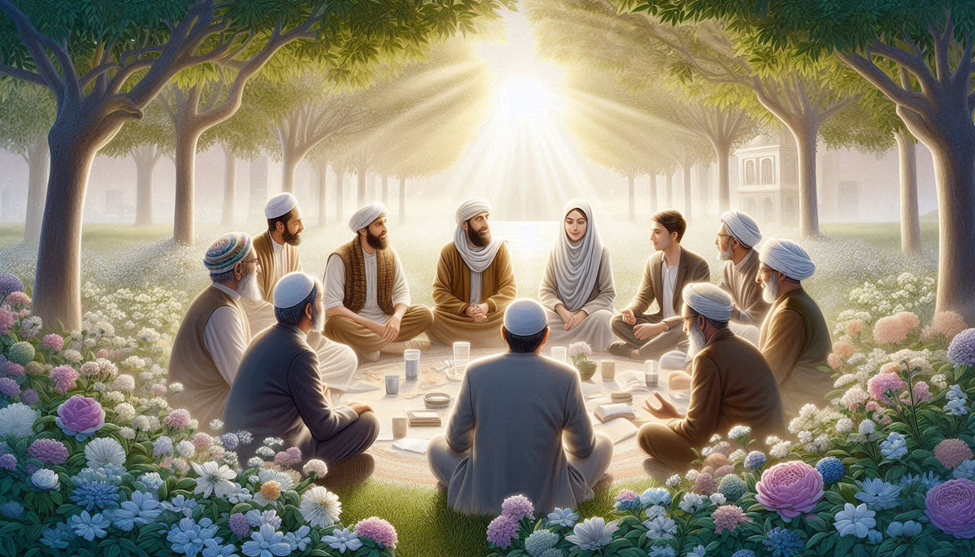
1. Introduction: Conflict as a Human and Spiritual Reality
Conflict is not a deviation from human life—it is woven into it. Wherever there are relationships, there will be disagreement; wherever there are differences in perception, expectation, or emotional need, there will be tension. Islam does not deny this reality, nor does it idealize a conflict-free existence. Instead, it offers a sophisticated moral and emotional framework for navigating conflict in ways that preserve dignity, protect the heart, and restore inner peace.
From family disputes and marital tensions to community disagreements and personal betrayals, conflict carries an emotional cost. When left unresolved—or resolved destructively—it generates anger, resentment, anxiety, guilt, and spiritual heaviness. Islam treats these emotional states not as trivial feelings but as conditions of the heart (alb) that affect one’s relationship with Allah, oneself, and others.
The Qur’an repeatedly addresses human disagreement, not merely to regulate behavior but to heal the emotional consequences of discord. Conflict resolution in Islam is therefore not only a social obligation; it is an act of worship, a form of spiritual purification, and a pathway to emotional relief.
2. Emotional Pain and Unresolved Conflict
Unresolved conflict is one of the most underestimated sources of emotional distress. Modern psychology confirms what Islamic spirituality has long recognized: suppressed anger and lingering resentment manifest as anxiety, depression, emotional numbness, and even physical illness. Islam frames these emotional disturbances as signs of imbalance within the heart.
The Prophet ﷺ warned:
“Beware of suspicion, for suspicion is the worst of false tales. And do not spy, nor backbite one another, nor hate one another, nor turn away from one another, but be servants of Allah as brothers.”
(Ṣaḥīḥ al-Bukhara, Ṣaḥīḥ Muslim)
Here, emotional decay—suspicion, hatred, withdrawal—is presented as more dangerous than the original disagreement itself. Islam recognizes that unresolved conflict corrodes the heart long after the argument has ended.
Emotionally, conflict triggers the naves al-amoral (the commanding ego), which seeks validation, dominance, and self-justification. Without spiritual discipline, the naves transform disagreement into ego warfare, where winning becomes more important than healing.
3. Islamic Anthropology: The Heart (Alb), Ego (Naves), and Conflict
To understand conflict resolution in Islam, one must first understand how Islam views the human inner world.
The Alb (Heart)
The alb is the spiritual and emotional center of the human being. It is described in the Qur’an as capable of clarity or corruption, softness or hardness. Conflict, when mishandled, hardens the heart, blocking mercy and spiritual receptivity.
“Then your hearts became hardened after that, being like stones or even harder…”
(Qur’an 2:74)
The Naves (Ego)
The naves resist humility and accountability. During conflict, it amplifies:
- Self-righteousness
- Emotional defensiveness
- Desire for retaliation
Islamic conflict resolution aims not merely to settle disputes but to discipline the naves and restore balance to the alb.
The Rūḥ (Spirit)
When conflict is resolved with sincerity, forgiveness, and justice, the rūḥ experiences relief. This is why reconciliation in Islam is consistently associated with sakīnah (tranquility).
4. Why Emotional Relief Is Central in Islamic Conflict Resolution
Unlike purely legalistic systems, Islam does not consider a conflict resolved simply because a verdict is issued or a compromise is reached. True resolution occurs when:
- The heart releases resentment
- The ego submits to truth
- Emotional burdens are lifted
Allah says:
“There is no good in much of their private conversation except for those who enjoin charity, or that which is right, or reconciliation between people. And whoever does that seeking the pleasure of Allah; we will give him a great reward.”
(Qur’an 4:114)
Notice that reconciliation is not praised for its social efficiency alone—but for its emotional and spiritual reward.
5. Conflict as a Test of Character, Not Just Patience
Islam reframes conflict as a moral examination. How one responds reveals:
- Emotional maturity
- Spiritual depth
- Trust in Allah
The Prophet ﷺ said:
“The strong person is not the one who overpowers others, but the one who controls himself when angry.”
(Ṣaḥīḥ al-Bukhara)
This habit situates emotional regulation—not dominance—as true strength. Emotional relief in Islam does not come from suppressing feelings, but from mastering them through faith.
6. Justice (`Adel) as the Backbone of Emotional Healing
In Islam, conflict resolution begins with justice (`ad)—not emotion, not power, and not personal preference. Justice is the stabilizing force that prevents conflict from escalating into emotional chaos. When justice is violated, emotional wounds deepen; when justice is restored, even painful outcomes can bring inner relief.
Allah commands:
“O you who believe! Stand firmly for justice, as witnesses to Allah, even if it be against yourselves, or your parents, or your relatives.”
(Qur’an 4:135)
This verse establishes a critical psychological truth: emotional relief cannot coexist with self-deception. Many conflicts persist not because truth is unclear, but because the ego resists accountability. Islam dismantles this resistance by making justice a form of worship.
Justice in Islam does not mean harshness. It means:
- Naming harm honestly
- Acknowledging responsibility
- Preventing repetition of wrongdoing
Emotionally, justice validates pain. Without validation, forgiveness becomes coercive, and reconciliation becomes fragile.
7. Justice vs. Vengeance: Healing Without Becoming Hard
Islam draws a clear distinction between seeking justice and seeking revenge. Revenge promises emotional release but often deepens bitterness, while justice aims for balance and closure.
Allah says:
“And the recompense of an evil is an evil like it, but whoever pardons and reconciles, his reward is with Allah.”
(Qur’an 42:40)
This verse is psychologically profound. It permits proportional response—acknowledging the human need for fairness—yet elevates forgiveness as a higher emotional and spiritual state.
Islam does not shame the wounded for feeling anger. Instead, it guides anger toward controlled, ethical action. Emotional relief arises not from retaliation, but from knowing one could retaliate—and choosing restraint for Allah’s sake.
8. Forgiveness (aft) as Emotional Liberation
Forgiveness in Islam is not denial of harm; it is release of emotional captivity. Holding resentment binds the heart to the offense, keeping the wound alive.
Allah asks:
“Do you not love that Allah should forgive you?”
(Qur’an 24:22)
This question reframes forgiveness as a reciprocal spiritual exchange. The believer forgives not because the offender deserves it—but because the heart deserves peace.
Psychological Impact of Forgiveness
Modern trauma psychology affirms that forgiveness:
- Reduces stress hormones
- Lowers anxiety and depression
- Improves emotional regulation
Islam anticipated this by tying forgiveness to Ramah (mercy)—a state that softens the heart and restores emotional balance.
9. When Forgiveness Is Not Immediate
Islam does not demand instant forgiveness. Emotional processes take time, and forced forgiveness can cause internal fragmentation.
The Qur’an recognizes emotional pacing:
“Let them pardon and overlook.”
(Qur’an 24:22)
The word yaʿfū implies gradual release, not sudden erasure. Emotional relief in Islam is a journey, not a command.
The Prophet ﷺ allowed companions time to process hurt before reconciliation, teaching that emotional honesty precedes emotional healing.
10. Restraint (Film) and Anger Management
Anger is one of the most volatile emotions in conflict. Islam does not suppress anger but channels it.
The Prophet ﷺ advised:
- Sit if standing
- Lie down if sitting
- Perform wuḍūʾ
- Remain silent
These are somatic regulation techniques—physical interventions that calm the nervous system. Long before modern psychology, Islam integrated body, mind, and soul in emotional regulation.
“Those who restrain anger and pardon people—and Allah loves the doers of good.”
(Qur’an 3:134)
Restraining anger is framed not as weakness, but as excellence (iḥsān).
11. Emotional Safety and Truthful Speech
Conflict escalates when emotional safety collapses. Islam insists on truthful, dignified speech even during disagreement.
Allah says:
“Speak words that are just and appropriate.”
(Qur’an 33:70)
Harsh words wound the heart more deeply than actions. Emotional relief requires:
- Tone awareness
- Intention clarity
- Avoidance of humiliation
Islamic conflict ethics protect emotional dignity as fiercely as legal rights.
12. Reconciliation (Ulf) as a Sacred Act
Reconciliation is not a social courtesy in Islam—it is a sacred duty.
“Reconciliation is best.”
(Qur’an 4:128)
The brevity of this verse underscores its universality. Reconciliation restores:
- Trust
- Emotional security
- Spiritual alignment
The Prophet ﷺ said that reconciling people is superior to voluntary fasting and prayer—because unresolved conflict poisons the heart, while reconciliation purifies it.
13. The Prophet ﷺ as the Ultimate Model of Emotional Intelligence
The Prophet Muhammad ﷺ did not merely teach conflict resolution—he embodied it. His approach combined emotional awareness, restraint, empathy, and moral clarity. Modern psychology defines emotional intelligence as the ability to recognize, understand, regulate, and respond constructively to emotions. The Sunni presents a complete, lived model of this intelligence more than fourteen centuries ago.
Allah describes him:
“And indeed, you are of tremendous character.”
(Qur’an 68:4)
This “tremendous character” was most visible during moments of conflict—when emotions run high and egos feel threatened.
14. Emotional Regulation before Problem-Solving
One of the Prophet’s ﷺ most consistent practices was addressing emotional states before addressing issues. He understood that no meaningful resolution is possible while emotions are deregulated.
When a man asked repeatedly for advice, the Prophet ﷺ responded:
“Do not become angry.”
(Ṣaḥīḥ al-Bukhara)
This was not a dismissal of emotion, but recognition that anger distorts judgment. Emotional relief precedes intellectual clarity.
Islam teaches that unresolved anger clouds the alb, leading to spiritual blindness:
“No, rather rust has covered their hearts because of what they used to earn.”
(Qur’an 83:14)
15. Silence as an Emotional Boundary
The Prophet ﷺ practiced intentional silence during moments of provocation. Silence in Islam is not avoidance—it is containment.
He ﷺ said:
“Whoever believes in Allah and the Last Day should speak well or remain silent.”
(Ṣaḥīḥ al-Bukhara, Muslim)
Silence interrupts emotional escalation. Psychologically, it prevents the amygdale-driven response from hijacking reason. Spiritually, it protects the heart from regret.
Silence creates space:
- Between stimulus and response
- Between emotion and action
- Between ego and accountability
16. Correcting Without Shaming
A defining feature of Prophetic conflict resolution was preserving dignity. The Prophet ﷺ corrected behavior without humiliating individuals.
Rather than naming offenders publicly, he would say:
“Why do some people do such-and-such?”
This approach separates the person from the behavior, allowing emotional relief without identity damage. Shame intensifies defensiveness; dignity opens the door to repentance.
Islam recognizes emotional safety as essential for transformation.
17. Listening as an Act of Mercy
The Prophet ﷺ listened deeply—even to those who opposed him. During the Treaty of Ḥudaybiyyah, companions were emotionally distressed by terms that felt unjust. The Prophet ﷺ did not invalidate their feelings; he held space for their pain.
This demonstrates a core Islamic principle: emotional validation is not endorsement of wrongdoing.
Listening:
- De-escalates conflict
- Regulates emotional arousal
- Builds trust
The Prophet ﷺ modeled listening as a form of mercy (Ramah).
18. Managing Conflict within the Home
The Prophet ﷺ experienced marital disagreements, yet never allowed conflict to degrade emotional safety.
ʿĀ’ishah (raḍiyallāhu ʿanhā) reported that he never struck a woman or servant. Even during disagreement, he upheld gentleness.
This teaches that emotional harm is a violation of Islamic ethics, regardless of authority or justification.
Domestic conflict resolution in Islam prioritizes:
- Calm dialogue
- Time-outs during anger
- Restoration of affection
19. Humor as Emotional Diffusion
The Prophet ﷺ occasionally used gentle humor to dissolve tension. Humor, when respectful, lowers defenses and restores emotional connection.
Islam does not demand emotional rigidity. It allows lightness where appropriate—because emotional relief often comes through human warmth, not lectures.
20. Responding to Hostility with Grace
The Prophet ﷺ endured mockery, rejection, and aggression. Yet his responses consistently aimed at emotional de-escalation, not ego defense.
At Ṭā’if, after severe mistreatment, he refused revenge and prayed for guidance for his aggressors. This was not emotional suppression—it was emotional transcendence.
Such responses protect the heart from hatred, which Islam considers spiritually corrosive.
21. The Power of Duʿāʾ in Emotional Processing
The Prophet ﷺ regularly turned to duʿāʾ during emotional strain. Duʿāʾ externalizes pain without projecting it onto others.
Duʿāʾ:
- Validates emotion before Allah
- Prevents emotional leakage into harmful behavior
- Restores inner calm
Islam offers duʿāʾ as an emotional processing tool, not merely a ritual.
Conclusion
Conflict in Islam is not treated as a mere interpersonal inconvenience but as a spiritual, emotional, and moral test that reveals the state of the heart. When conflicts are approached through ego, anger, and vengeance, they deepen emotional wounds and harden the alb. When approached through the Qur’an and Prophetic framework, however, conflict becomes a gateway to emotional relief, inner purification, and relational healing.
Islam offers a balanced path—one that neither suppresses emotion nor allows it to dominate behavior. Justice (ad) validates pain and restores dignity, while forgiveness (aft) liberates the heart from resentment. The Sunni of the Prophet ﷺ demonstrates that emotional intelligence, restraint, silence, and mercy are not weaknesses but forms of spiritual strength. Through these principles, Islam protects emotional safety while upholding moral accountability.
True resolution in Islam does not always require reconciliation at any cost; sometimes emotional relief comes through healthy boundaries, distance, or entrusting one’s pain to Allah. Practices such as duʿāʾ, shirk, and tawakkul allow believers to process conflict without internalizing bitterness or transmitting harm to others. In this way, Islam integrates emotional regulation, ethical conduct, and spiritual growth into a single holistic system.
Ultimately, conflict resolution in Islam aims not simply to end disputes but to restore tranquility (sakīnah) within the individual and society. By healing the heart before winning the argument, Islam ensures that peace is not superficial but deeply rooted—anchored in faith, guided by mercy, and sustained by emotional wisdom.
SOURCES
The Qur’an (610–632 CE) – Primary Islamic source on justice, forgiveness, and reconciliation
Ṣaḥīḥ al-Bukhara (d. 870) – Prophetic traditions on anger, forgiveness, and conduct
Ṣaḥīḥ Muslim (d. 875) – Habit on emotional restraint and reconciliation
Al-Ghazālī (1100) – Iḥyāʾ Culm al-Den, purification of the heart
Bin al-Qayyim (1350) – Mandarin al-Sālikīn, emotions and spiritual states
Bin Taymiyyah (1328) – Justice, reconciliation, and ethical balance
Al-Rāghib al-Iṣfahānī (1108) – Moral psychology in the Qur’an
Al-Qurṭubī (1273) – Tafsīr on forgiveness and social harmony
Fazlur Rahman (1982) – Ethical foundations of Islam
Abdul Haleem, M.A.S. (2004) – Qur’an discourse and moral reasoning
Daniel Goldman (1995) – Emotional Intelligence
Aaron T. Beck (1976) – Cognitive theory of emotional regulation
Judith Herman (1992) – Trauma and recovery
Bessel van deer Koll (2014) – Emotional trauma and the body
Marshall Rosenberg (2003) – Nonviolent communication
Carl Rogers (1961) – Empathy and emotional validation
John Guttmann (1999) – Conflict, repair, and emotional safety
Viktor Frankly (1959) – Meaning, suffering, and resilience
Paul Elman (2003) – Emotions and self-regulation
Everett Worthington (2006) – Forgiveness and mental health
Kenneth Argument (2007) – Spiritual coping and emotional relief
Mali Bari (1979) – Islamic psychology
Abu Zed al-Balkh (850) – Early Muslim psychology and emotional disorders
Asian Mohamed (2013) – The psychology of the alb in Islam
HISTORY
Current Version
January 01, 2026
Written By
ASIFA





Leave a Reply