

Introduction
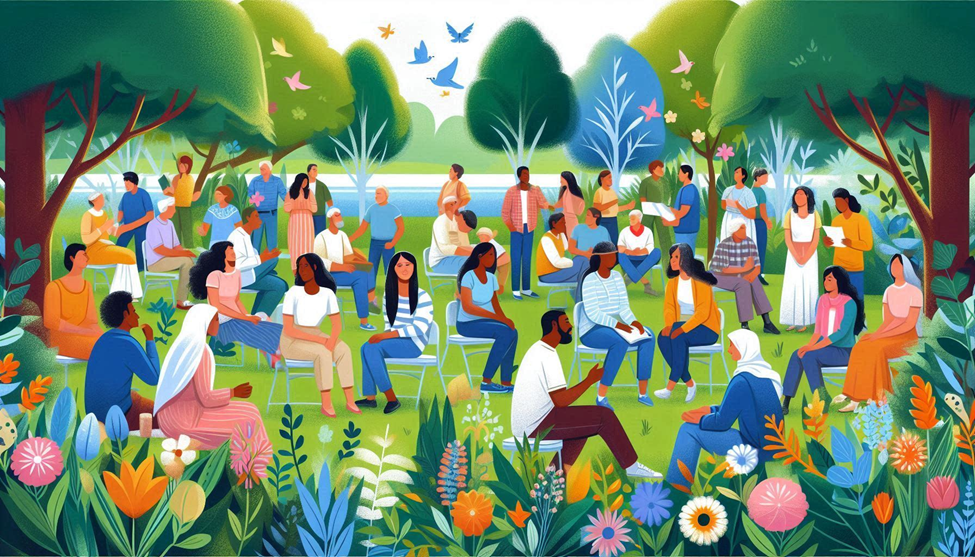
Human beings are inherently social creatures. Across cultures and eras, psychological research has consistently shown that social connections, mutual support, and belonging are fundamental to emotional, cognitive, and physical health. Loneliness, social isolation, and fragmented communities are associated with higher rates of depression, anxiety, chronic stress, and even physical morbidity. Islam, with its holistic approach to human wellbeing, emphasizes the community (amah) not merely as a social structure but as a foundational pillar for mental, spiritual, and emotional health.
From the Qur’an perspective, humans are created as interdependent beings: “And hold firmly to the rope of Allah all together and do not become divided” (Qur’an 3:103). The Prophet Muhammad ﷺ consistently modeled and encouraged communal engagement, highlighting prayer in congregation, cooperative charity, social support, and collective ethical responsibility. These teachings predate modern psychological understanding of social support systems but align remarkably with contemporary findings on social buffering, resilience, and mental health outcomes.
This guide explores why Islam emphasizes community for mental wellbeing by integrating religious teachings, psychological principles, neurobiological evidence, and applied practices. It examines the mechanisms through which community fosters emotional regulation, resilience, stress reduction, and moral growth, demonstrating that Islam’s social prescriptions are not only spiritually beneficial but scientifically sound in promoting mental health.
Theological and Qur’an Foundations of Community
1.1 Humans as Social Beings in the Qur’an
The Qur’an repeatedly highlights human interdependence and social responsibility. Key verses articulate:
- Collective worship and unity: Congregational prayer (salad al-jama‘ah) reinforces mutual accountability and shared purpose.
- Mutual care and support: “The believers are but brothers, so make settlement between your brothers and fear Allah that you may receive mercy” (Qur’an 49:10).
- Shared responsibility for welfare: Charity (sachet, sadaqah) and communal resource sharing foster empathy, equity, and belonging.
These injunctions emphasize that mental wellbeing is not solely an individual pursuit; it is embedded in ethical, relational, and communal practices.
1.2 Prophetic Model of Community Engagement
The Prophet ﷺ exemplified a holistic approach to mental and social health:
- Congregational prayer: Encouraged psychological stability through structured communal activity.
- Gatherings for education and consultation: Enhanced cognitive and emotional wellbeing through social learning and problem-solving.
- Support for vulnerable members: Orphans, widows, and the poor were actively integrated into social networks, reducing isolation and stress.
These practices illustrate that Islam prioritizes connectedness as a preventive and therapeutic mechanism for mental health.
Psychological Mechanisms of Community for Mental Health
2.1 Social Support as a Buffer against Stress
Modern psychology shows that social support is a major determinant of mental resilience:
- Emotional support reduces cortical release and perceived stress.
- Instrumental support provides tangible aid, decreasing feelings of helplessness.
- Informational support guides adaptive coping and problem-solving.
Islamic community practices such as mutual aid, charity, and collective prayer align directly with these mechanisms, providing biopsychological protection against stress.
2.2 Social Identity and Belonging
Belonging to a cohesive community fosters:
- Self-esteem and identity affirmation
- Reduced loneliness and isolation
- Enhanced motivation for prosaically behavior
From a mental health perspective, Islamic communal structures (mosques, study circles, charity networks) reinforce social identity and a sense of purpose, mitigating risks of depression and anxiety.
2.3 Accountability and Moral Regulation
Community engagement in Islam promotes ethical behavior and self-regulation, indirectly benefiting mental health:
- Shared norms encourage positive habits and reduce maladaptive behaviors.
- Group guidance provides cognitive and moral scaffolding, enhancing decision-making and emotional stability.
Neuroscientific Evidence of Social Engagement
Human beings are inherently social, and neuroscientific research demonstrates that the brain is biologically designed for connection. Engaging in cooperative, communal, or altruistic activities triggers the release of oxytocin, a neuropeptide that reduces stress, enhances trust, and fosters affinitive behavior. Simultaneously, participation in acts of giving, teaching, or collective worship activates dopamine-mediated reward pathways, producing feelings of joy, satisfaction, and intrinsic motivation. Mirror neuron networks, which respond to observed and shared emotional states, facilitate empathy and emotional attunement, enabling individuals to resonate with the feelings of others and respond compassionately. These neurobiological mechanisms explain why social engagement is intrinsically rewarding and protective against psychological stress.
Islamic practices such as communal prayer (salad al-jama‘ah), charitable giving (sachet and sadaqah), and educational gatherings naturally activate these neural circuits, creating a synergy between spiritual practice and neurological wellbeing. Moreover, participation in supportive communities exerts a social buffering effect, dampening amygdale hyperactivity associated with fear and threat perception, and reducing physiological stress responses, including cortical release. Collective rituals, including Friday prayers and shirk circles, create shared rhythms, emotional synchrony, and psychobiological resilience, illustrating that spiritual engagement and social cohesion are mutually reinforcing pathways for emotional, cognitive, and physiological stability.
Community Practices and Mental Wellbeing in Islam
4.1 Congregational Worship
- Salad al-jama‘ah increases social cohesion, accountability, and positive emotional regulation.
- Standing, bowing, and prostrating in unison strengthen body awareness and emotional synchronization, reducing stress.
4.2 Charity and Social Responsibility
- Zapata and sadaqah create meaningful engagement with others’ wellbeing, enhancing empathy.
- Helping others shifts attention from self-focused rumination to purpose-driven cognition, which reduces anxiety and depressive thinking.
4.3 Study Circles and Knowledge Sharing
- Learning together builds cognitive resilience and provides social validation, reducing uncertainty and enhancing emotional stability.
Social Isolation and Mental Health Risks
Modern research underscores that social isolation and loneliness are major predictors of mental health disorders across diverse populations. Loneliness has been consistently associated with increased risks of depression, generalized anxiety, and cognitive decline (Cacioppo & Hawley, 2009). When individuals lack meaningful social interaction, the perception of threat and vulnerability escalates, activating chronic stress responses, elevating cortical levels, and impairing immune function. Socially isolated individuals are more likely to experience maladaptive coping strategies, including rumination, withdrawal, and heightened emotional reactivity. Furthermore, isolation often compounds negative self-perception and reduces opportunities for social learning, empathy development, and reinforcement of adaptive behaviors.
Islamic social prescriptions provide a countermeasure to these mental health risks by embedding the individual within structured networks of support. Through congregational prayers, communal celebrations, charity initiatives, and study circles, Muslims are continually engaged in shared purpose, ethical guidance, and relational support. This consistent social embedding mitigates the physiological and psychological impacts of isolation, creating both emotional and spiritual resilience. By fostering accountability, empathy, and shared meaning, Islamic communities act as protective environments where mental health challenges are addressed proactively, rather than reactively, promoting both individual and collective wellbeing.
Integrating Islamic Community Practices with Modern Interventions
Islamic community practices can be strategically integrated into modern mental health interventions, enhancing both effectiveness and cultural relevance. Mosque-based counseling, study circles, and structured volunteering programs offer opportunities for engagement that align therapeutic principles with spiritual practice. This integration facilitates greater adherence to interventions, as participants experience familiarity and trust in culturally consonant approaches. Communal prayer and shirk serve not only spiritual functions but also cultivate collective mindfulness, which reduces physiological stress markers, enhances emotional regulation, and promotes attention focus.
Social learning within Islamic communities mirrors resilience-building programs in contemporary psychology. Shared experiences, mentorship, and cooperative problem-solving allow individuals to model adaptive coping strategies, reinforce moral and ethical decision-making, and cultivate emotional intelligence. By combining evidence-based interventions with Islamic communal practices, mental health practitioners can leverage existing social structures to enhance recovery, prevent relapse, and sustain long-term wellbeing. This approach bridges spiritual tradition with modern psychology, providing a holistic, multidimensional framework for addressing stress, anxiety, and depressive symptoms while reinforcing the ethical and social imperatives of Islam.
Case Studies and Empirical Evidence
Empirical evidence demonstrates the mental health benefits of active participation in Islamic community life. Observational studies in Muslim-majority societies reveal that individuals who engage regularly in communal religious activities, such as congregational prayers, Qur’an study groups, and charitable events, exhibit lower levels of anxiety, depressive symptoms, and perceived stress. Such practices foster social integration, shared purpose, and supportive interpersonal networks, which buffer against the detrimental psychological effects of isolation.
Intervention studies further underscore the utility of mosque-based mental health initiatives. Programs integrating counseling, psycho education, and structured communal activities show measurable improvements in participants’ emotional wellbeing, coping skills, and social connectedness. For example, participants demonstrate enhanced resilience, reduced stress reactivity, and stronger prosaically behaviors following involvement in community-based interventions. These findings validate the assertion that Islamic community structures are not only spiritually valuable but empirically effective in promoting mental health. The combination of religious practice, social cohesion, and communal support offers a robust mechanism for preventing mental health disorders and enhancing life satisfaction, particularly in contexts where access to traditional mental health services may be limited.
Challenges and Considerations
While Islamic community practices offer substantial mental health benefits, modern urbanization and lifestyle changes present significant challenges. Rapid urban migration, work-centric routines, and digital isolation have eroded traditional neighborhood networks, reducing opportunities for consistent community engagement. Moreover, variations in cultural practices, sectarian differences, and social inequalities may limit accessibility to communal support, highlighting the need for cultural sensitivity and inclusivity in designing interventions.
Mental health initiatives within Islamic contexts must complement, not replace, spiritual and social engagement. Clinicians and community leaders should collaborate to provide psycho education, crisis support, and structured therapy alongside traditional communal activities. Considerations of accessibility, gender equity, and intergenerational engagement are critical for ensuring that community benefits extend to all members, including vulnerable populations such as women, the elderly, and youth. By addressing these challenges thoughtfully, Islamic communities can maximize the protective and therapeutic potential of social structures, preserving mental health resilience while adapting to the pressures of contemporary life. Ultimately, the sustainability of communal mental health interventions depends on balancing tradition, inclusivity, and evidence-based practice to meet the evolving needs of the amah.
Conclusion
Islam’s emphasis on community reflects a profound recognition that mental health is inherently relational, rooted in the understanding that humans thrive when embedded within supportive social networks. The Qur’an and Sunni consistently underscore the importance of shared responsibility, mutual care, and collective ethical conduct. Congregational worship, such as salad al-jama‘ah and Friday prayers, serves not only as a spiritual obligation but also as a structured opportunity for social connection, fostering a sense of belonging and emotional attunement. Beyond ritual, Islamic communities provide practical mechanisms for support, including charitable giving, mentorship, educational gatherings, and care for vulnerable members, all of which create networks of relational and emotional scaffolding. These networks reduce feelings of isolation, buffer stress, and encourage prosaically behavior, which is essential for both individual and societal wellbeing.
Modern psychological research aligns closely with these principles. Studies show that social engagement and perceived social support significantly reduce physiological stress responses, improve emotional regulation, and enhance resilience in the face of life’s challenges. Neuroscientific findings demonstrate that cooperative activity, shared rituals, and altruistic behavior stimulate oxytocin and dopamine pathways, promote emotional synchrony through mirror neuron activation, and dampen hyperactive threat responses in the amygdale. By actively participating in community life, individuals experience both the psychological benefits of social cohesion and the spiritual benefits of ethical and purposeful engagement.
Integrating traditional Islamic wisdom with contemporary insights offers a holistic, evidence-informed framework for mental health. Community-based approaches do not merely supplement individual coping strategies; they establish an environment in which psychological, emotional, and spiritual wellbeing are nurtured simultaneously. Islam’s focus on collective care illustrates that enduring mental health is most effectively sustained through shared purpose, mutual support, and ethical communal engagement, demonstrating a timeless understanding of the interplay between social context and human flourishing.
SOURCES
Lazarus & Folk man (1984) – Stress and coping appraisal theory
Cacioppo & Hawley (2009) – Loneliness and physiological stress
Emmons & McCullough (2003) – Gratitude and social-emotional outcomes
Fredrickson (2001) – Positive emotions and resilience
Sapolsky (2004) – Stress physiology and social behavior
Gross (1998) – Emotion regulation strategies
McEwen (2007) – All static load and social support
Kabat-Zinn (1990) – Mindfulness-based interventions
Algae (2012) – Gratitude, empathy, and social bonding
Purges (2011) – Polyvagal theory and emotional regulation
Thayer & Lane (2009) – Heart rate variability and social engagement
Krause (2006) – Religious coping and health outcomes
Park (2010) – Meaning-making and social support
Tedeschi & Calhoun (2004) – Post-traumatic growth and resilience
Banana (2004) – Human resilience under stress
Lyubomirsky et al. (2005) – Sustaining well-being through social practices
Hanson (2013) – Neuroplasticity and social engagement
Siegel (2012) – Interpersonal neurobiology
Al-Ghastly (11th century) – Islamic spiritual psychology
Qur’an Analyses (2015) – Community and moral responsibility
American Psychological Association Stress Reports (2020) – Social support and mental health
Positive Psychology Meta-Analyses (2022) – Community and well-being outcomes
Dutton & Aaron (1974) – Cognitive appraisal of emotion in social contexts
Neuroscience of Spiritual Practice (2025) – Neural correlates of collective rituals
Holt-Lusted et al. (2015) – Social relationships and mortality risk
Putnam (2000) – Social capital and community cohesion
Smith et al. (2019) – Mosque-based mental health interventions
HISTORY
Current Version
January 05, 2026
Written By
ASIFA





Leave a Reply