

Introduction
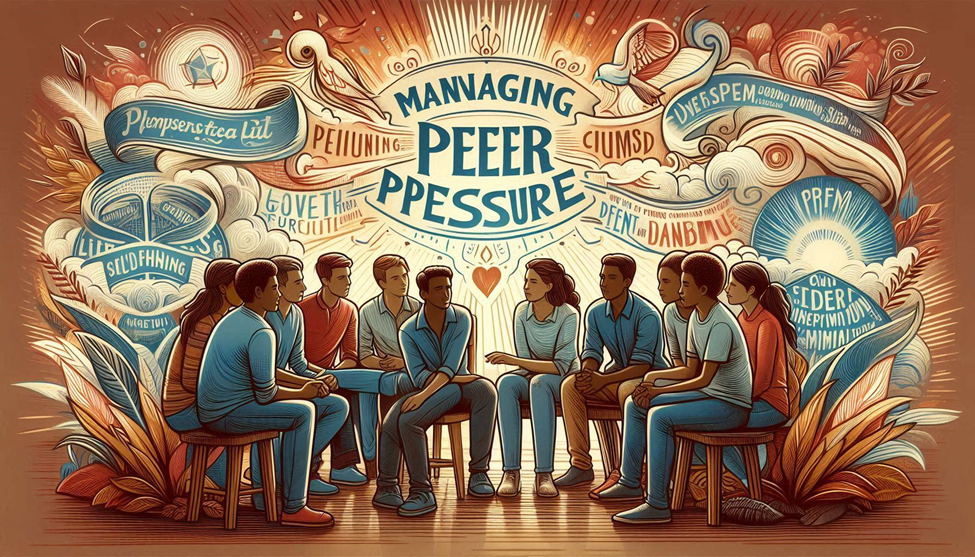
Adolescence is a pivotal stage in human development, characterized by the search for identity, autonomy, and social belonging. It is a period of intense cognitive, emotional, and social growth, where young individuals are learning to navigate complex interpersonal dynamics and develop a sense of personal responsibility. During this critical phase, youth are particularly susceptible to peer pressure, which can manifest in multiple forms—ranging from subtle suggestions and social cues to direct coercion or overt encouragement to adopt behaviors that may conflict with moral, ethical, or spiritual values. The influence of peers is often powerful because adolescents are developing their sense of self and tend to place high value on social acceptance and belonging. Peer pressure is therefore not merely a social challenge; it carries profound implications for psychological well-being, ethical development, and spiritual health. Youth who repeatedly succumb to negative social influences may experience increased stress, anxiety, and moral confusion, which can have long-term effects on their character and life choices.
In today’s globalized and digitally connected world, the challenges of peer influence have become even more complex. Social media platforms, online gaming communities, and pop culture create constant exposure to trends, behaviors, and attitudes that may contradict Islamic ethical and moral teachings. Unlike previous generations, contemporary youth must navigate pressures not only from their immediate social circles but also from a vast, interconnected global audience. This constant exposure amplifies the risk of adopting harmful habits or compromising core values in pursuit of social approval.
While modern psychology provides tools such as assertiveness training, cognitive reframing, and resilience-building to manage peer pressure, these strategies often lack a spiritual dimension. The guidance of Prophet Muhammad (peace be upon him), however, offers timeless, ethically grounded, and spiritually enriching principles that address the root of moral decision-making. Through lessons on righteous companionship, patience, self-restraint, and God-consciousness (taw), youth can cultivate both inner strength and moral clarity. By integrating these principles into daily life, adolescents are empowered not only to resist negative influence but also to become positive agents of change within their communities.
This guide explores the phenomenon of peer pressure in youth, the consequences of succumbing to negative influence, and provides a detailed framework for leveraging Prophetic guidance to foster resilience, moral clarity, ethical decision-making, and social confidence in adolescents navigating today’s complex world.
Understanding Peer Pressure
Definition and Types of Peer Pressure
Peer pressure is the influence exerted by peers or social groups to encourage conformity to shared behaviors, attitudes, or values. It can be explicit, such as direct invitations to engage in particular actions, or implicit, involving subtle cues, social norms, or emotional expectations. Peer pressure is often categorized into:
- Positive Peer Pressure – Encourages constructive behaviors, such as studying, volunteering, or engaging in spiritual practices.
- Negative Peer Pressure – Leads to harmful behaviors, including substance use, dishonesty, aggression, or neglect of religious obligations.
Understanding the nuances of peer pressure is critical. Not all influence is inherently harmful; the challenge lies in discerning beneficial guidance from detrimental coercion.
Psychological and Social Impacts on Youth
Adolescents are particularly sensitive to peer influence due to developmental factors:
- Identity formation: Young individuals often test limits to establish a sense of self.
- Social belonging: Acceptance by peers becomes a significant source of self-esteem.
- Cognitive development: Underdeveloped executive functions may limit impulse control and risk assessment.
Negative peer pressure can result in:
- Increased anxiety, depression, and stress
- Ethical compromises and moral confusion
- Academic underachievement
- Risk-taking behaviors
- Spiritual disengagement
Recognizing these risks underscores the importance of equipping youth with strategies rooted in both psychological insight and spiritual guidance.
Prophetic Guidance Relevant to Peer Pressure
Key Principles
The teachings of Prophet Muhammad (peace is upon him) emphasize self-restraint, moral courage, and ethical consistency in the face of social influence. Core principles include:
- Tawas (God-consciousness) – Awareness of Allah’s presence fosters moral clarity and accountability. Youth anchored in taw are less likely to succumb to unethical peer pressure.
- Sadaqah and Good Company – Associating with virtuous peers is repeatedly encouraged. The Prophet stated, “A person is likely to follow the religion of his friend; so look whom you befriend.” (Abu Dagwood, Tirmidhi)
- Adherence to Truth and Integrity – Honesty and uprightness are central. Youth are taught to prioritize divine guidance over transient social approval.
- Patience and Courage – Standing firm in moral choices, even under social pressure, is considered a form of spiritual resilience.
Prophetic Stories Demonstrating Resistance
Several incidents in the See rah illustrate strategies for managing social influence:
- The Boy Who Spoke the Truth: The Prophet emphasized that even in youth; truthfulness is valued over social conformity.
- Bill bin Raba’s Perseverance: Despite immense peer and societal pressure, Bill upheld faith and moral integrity, demonstrating the power of steadfastness.
- Companions’ Choice of Friends: The Prophet guided companions to choose companions who inspire positive change, illustrating the principle of selective social influence.
Practical Strategies for Youth Based on Prophetic Guidance
1. Developing Strong Self-Identity Through Faith
Youth should cultivate a personal sense of purpose and identity rooted in Islamic values. Strategies include:
- Regular reflection on the Qur’an and Habit to internalize ethical principles
- Journaling about personal goals and moral convictions
- Engaging in shirk (remembrance of Allah) to maintain spiritual clarity
2. Cultivating Supportive Peer Networks
The Prophet encouraged forming circles of friendship that reinforce moral values:
- Participation in youth groups or community initiatives
- Choosing companions who exemplify positive behaviors
- Mentorship from elder peers or religious leaders
3. Practicing Assertive Communication
Youth can resist peer pressure by assertively expressing their choices:
- Politely declining participation in harmful activities
- Using wisdom in speech to redirect group norms
- Seeking guidance from Qur’an and Sunni in framing responses
4. Employing Cognitive and Emotional Strategies
Psychologically informed techniques aligned with Prophetic guidance include:
- Cognitive reframing: Viewing peer pressure as a test of faith
- Emotional regulation: Using prayer and shirk to manage anxiety about rejection
- Delayed gratification: Prioritizing long-term ethical and spiritual goals over short-term social approval
5. Strengthening Spiritual Anchors
The Prophet’s guidance emphasizes that spiritual practices enhance resilience:
- Daily Selah (prayer) as a grounding practice
- Dura for guidance and protection
- Fasting, charity, and other forms of worship to build moral fortitude
Integrating Prophetic Strategies with Modern Psychological Insights
Positive Psychology and Resilience
Contemporary psychology highlights resilience as the capacity to adapt positively under pressure. Prophetic teachings complement this by emphasizing:
- Self-efficacy through faith: Belief in one’s ability to act morally strengthens resistance to negative influence.
- Moral reasoning development: Ethical decision-making based on divine guidance aligns with Kohlberg’s stages of moral development.
- Community support: Mentorship and social support networks buffer against harmful peer influence.
Social Media and Peer Influence
Digital platforms amplify peer pressure. Prophetic strategies can be adapted for this modern context:
- Crating online social networks to include inspiring, positive content
- Limiting exposure to toxic trends and content
- Engaging in online communities that encourage Islamic learning and ethical behavior
Case Examples and Applications
1. Youth in School Settings
Students in academic environments frequently face pressure to compromise their integrity, such as being tempted to cheat on exams or plagiarize assignments. In these moments, invoking assertive communication skills allows them to respectfully decline participation while maintaining social harmony. Coupled with trust in Allah (tawakkul) and reliance on ethical principles, students can cultivate resilience against peer pressure. Drawing inspiration from the Prophet Muhammad’s (peace be upon him) teachings on honesty and accountability, they learn that personal success is inseparable from moral integrity. By choosing ethical behavior over shortcuts, youth protect their academic reputation, emotional energy, and spiritual well-being, fostering a sense of pride, self-respect, and long-term growth.
2. Online Peer Pressure
Digital platforms expose teenagers to new forms of peer influence, such as cyber bullying, participation in harmful online trends, or spreading false information. Confronting these challenges requires digital mindfulness—actively monitoring one’s online behavior, evaluating potential consequences, and resisting impulsive reactions. Regular spiritual reflection, including prayer, shirks, and contemplation of ethical guidelines, reinforces internal moral compasses. By combining technological awareness with faith-based reflection, youth can navigate online spaces responsibly, maintain their emotional equilibrium, and avoid actions that harm others. This proactive approach reduces stress, prevents guilt, and builds digital resilience, allowing teenagers to engage positively in social media while upholding personal and spiritual values.
3. Peer Pressure in Sports or Clubs
Participation in sports teams or extracurricular clubs often brings subtle pressure to conform to behaviors that may conflict with personal or ethical standards. The Islamic emphasis on good companionship (shah) and ethical conduct equips youth to prioritize fair play, teamwork, and integrity over winning at any cost. By practicing mindfulness, accountability, and moral courage, young athletes and club members can resist negative influence while encouraging positive behavior in others. Upholding ethical standards strengthens trust, fosters mutual respect, and creates healthier social environments. Over time, this cultivates leadership, emotional resilience, and a reputation for principled behavior, both on and off the field.
Challenges in Implementing Prophetic Strategies
While the principles are timeless, practical barriers include:
- Lack of awareness or understanding of Islamic teachings
- Fear of social rejection or ridicule
- Inconsistent role models within the immediate environment
- Cultural pressures conflicting with ethical guidance
Solutions involve education, mentorship programs, youth engagement initiatives, and supportive community structures.
Conclusion
Managing peer pressure in youth is a multifaceted challenge that intertwines social, psychological, and spiritual dimensions. Adolescents, navigating the critical stages of identity formation and social belonging, often face pressures that can compromise ethical, moral, and spiritual integrity. The teachings of Prophet Muhammad (peace is upon him) offer timeless strategies that are both practical and spiritually grounded, providing youth with tools to resist harmful influences while cultivating resilience, confidence, and moral clarity.
Central to these teachings is the cultivation of taw, or God-consciousness, which fosters inner accountability and a strong ethical compass. The Prophet’s guidance on choosing righteous companions, practicing honesty, and exercising patience demonstrates the profound link between social behavior and spiritual development. By internalizing these principles, youth develop the ability to make autonomous, morally sound decisions, even in the face of peer coercion.
Moreover, integrating Prophetic guidance with modern psychological insights, such as resilience-building, cognitive reframing, and emotional regulation, equips youth to navigate both physical and digital social environments effectively. Whether in schools, online spaces, or community settings, faith-based strategies empower adolescents to transform challenges into opportunities for growth, reinforcing both character development and spiritual maturity.
Ultimately, the management of peer pressure is not only about resistance but also about proactive cultivation of ethical influence. Youth who adopt these practices become role models, creating positive social environments that encourage integrity, compassion, and accountability. By blending spiritual wisdom with contemporary psychological understanding, adolescents are positioned to thrive socially, emotionally, and spiritually, ensuring that their choices reflect both personal authenticity and alignment with divine guidance.
SOURCES
Bandura, 1977 – Social Learning Theory; explains peer influence and modeling.
Erikson, 1968 – Identity development in adolescence.
Kohlberg, 1981 – Moral development stages and decision-making.
Piaget, 1972 – Cognitive development and risk assessment in youth.
Al-Ghastly, 2000 – Spiritual education and moral cultivation in youth.
Nasr, 2015 – Islamic perspective on ethics and social behavior.
Haiti, 2012 – Moral psychology and social influences on behavior.
Abu Dagwood, Habit 2765 – Importance of choosing righteous companions.
Tirmidhi, Habit 237 – Friendship influences moral character.
Bill bins Raba See rah – Historical example of steadfast faith under social pressure.
Al-Qaradawi, 1999 – Contemporary applications of Islamic ethics.
Seligman, 2011 – Positive psychology and resilience strategies.
Bronfenbrenner, 1979 – Ecological systems theory; influence of social environment.
Vygotsky, 1978 – Social learning in youth development.
Peterson & Seligman, 2004 – Character strengths and virtues framework.
Qur’an 49:13 – Guidance on morality, ethics, and societal interactions.
Qur’an 29:69 – Emphasis on striving for righteousness and guidance.
Habit – Shih Bukhara, 6130 – Integrity and truthfulness as a moral compass.
Habit – Shih Muslim, 2564 – Patience and resilience in social challenges.
Phase et al., 2014 – Peer influence on adolescent behavior and mental health.
Steinberg, 2008 – Adolescent brain development and susceptibility to peer pressure.
Walton, 2016 – Digital peer influence and social media effects.
Nassir et al., 2020 – Integrating Islamic practices with psychological resilience.
Al-Hire, 2010 – Prophetic counseling and youth guidance principles.
McWhirter, 2014 – Strategies for youth decision-making under social pressure.
Luther & Cochiti, 2000 – Resilience and protective factors in adolescence.
Shah, 2018 – Practical applications of Sunni in modern youth education.
HISTORY
Current Version
January 10, 2026
Written By
ASIFA





Leave a Reply