

Introduction
Stress in modern psychology is most commonly understood as a physiological and cognitive reaction to perceived threats or demands, activating neuroendocrine pathways that prepare the body for adaptation or survival. Research into stress hormones such as cortical, appraisal mechanisms, and emotional regulation strategies has contributed greatly to clinical interventions and performance psychology. These models explain how stress manifests in the body and mind, yet they often remain limited in explaining why certain stressors carry profound emotional weight, why suffering can feel existentially destabilizing, or why individuals with similar circumstances experience stress so differently. By largely excluding metaphysical meaning, moral purpose, and spiritual orientation, modern frameworks risk reducing human distress to a purely mechanical process.
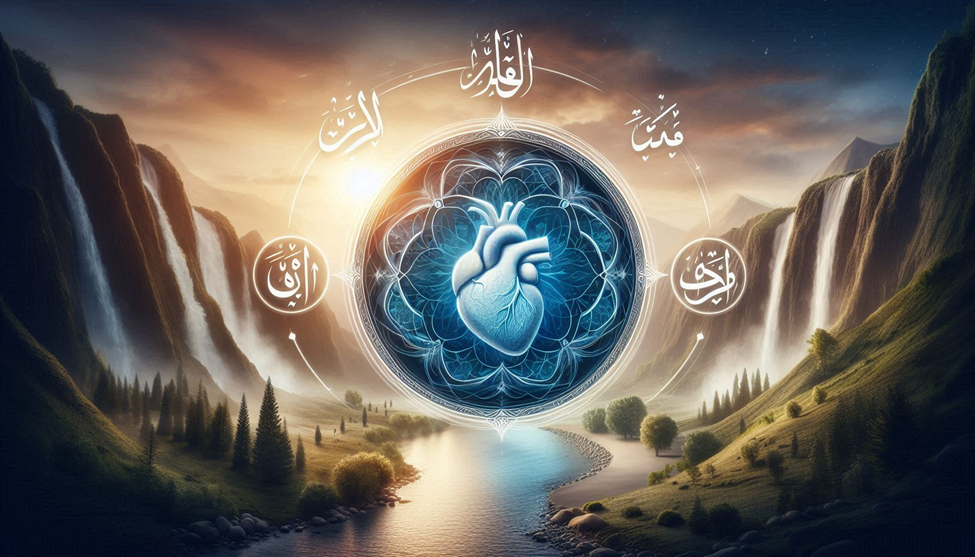
Islamic psychology offers a broader and more integrative paradigm, viewing stress as an expression of imbalance within the total human system rather than an isolated biological malfunction. From this perspective, stress arises when harmony is disrupted among the interconnected dimensions of the human being: the naves, which governs desire, fear, and egoism attachment; the alb, which serves as the center of perception, moral insight, and emotional awareness; and the rah, the divine spirit that connects the individual to transcendence, meaning, and ultimate purpose. When the naves dominates unchecked, the alb becomes burdened, and the rah is neglected, stress intensifies—not merely as tension, but as inner fragmentation.
Unlike secular models that often compartmentalize mental health and spirituality, Islam views psychological wellbeing as inseparable from one’s relationship with Allah. Ethical conduct, spiritual remembrance, and conscious reliance upon the Divine are not peripheral coping tools; they are foundational elements of mental stability. The Qur’an openly acknowledges anxiety, grief, fear, and hardship as intrinsic to human life, yet it reframes them within a purposeful cosmology. Stress is not random suffering or evidence of divine displeasure; it is a test that refines character, awakens awareness, and elevates spiritual rank.
By grounding psychological distress in meaning and divine wisdom, the Qur’an worldview fundamentally transforms how stress is interpreted, endured, and healed. This guide explores an Islamic psychology of stress by examining the dynamic interaction of the naves, alb, and rah, drawing upon classical Islamic scholarship while engaging contemporary psychological insights to present a holistic and deeply human understanding of stress.
The Islamic Model of the Human Self
Islamic scholars never reduced the human being to a single component. Instead, they described the human psyche as a dynamic system, where inner harmony or discord determines psychological wellbeing.
The Three Core Dimensions
- Naves – The self, ego, or lower psyche
- Alb – The spiritual heart and center of perception
- Ruhr – The divine spirit breathed into humanity
Stress arises when these dimensions fall out of alignment, particularly when the naves dominates the alb and disconnects from the rah.
The Naves: The Psychological Engine of Stress
Understanding the Naves
The naves represent the aspect of the self that desires, reacts, fears, competes, and seeks control. It is not inherently evil, but it is impulsive, fragile, and easily destabilized.
The Qur’an describes multiple states of the naves:
- Naves al-Amoral (The Commanding Self)
Inclined toward impulsivity, ego, fear, and excess - Naves al-Lawwoman (The Self-Reproaching Self)
Aware, reflective, struggling between good and wrong - Naves al-Muṭma’innah (The Tranquil Self)
Anchored in trust, surrender, and spiritual clarity
Stress is most intense when the naves are amoral-driven—constantly chasing validation, security, and control in an uncertain world.
How the Naves Generates Stress
From an Islamic perspective, stress emerges when the naves:
- Demands certainty in a world designed for uncertainty
- Seeks control over outcomes Allah has not guaranteed
- Attaches self-worth to status, wealth, productivity, or approval
- Fears loss because it forgets Divine provision
- Compares itself constantly with others
The Qur’an states:
“Indeed, the human being was created anxious.”
(Sarah Al-Mazarin 70:19)
This anxiety is not condemned—it is acknowledged. However, the verse continues by showing that remembrance of Allah disciplines this anxiety.
Stress as Naves Inflation
Many modern stressors—burnout, performance anxiety, chronic worry—stem from what Islamic scholars would describe as naves inflation. The self becomes too central, too fragile, and too burdened with responsibility it was never meant to carry alone.
This leads to:
- Hyper vigilance
- Emotional reactivity
- Rumination
- Perfectionism
- Fear of failure
- Exhaustion
Without spiritual anchoring, the naves become overworked and under-guided.
The Alb: The Psychological Heart of Balance
The Alb as the Center of Consciousness
In Islamic psychology, the alb is not merely an emotional metaphor—it is the seat of awareness, moral perception, and spiritual cognition. The word alb itself comes from taqallub, meaning “to turn,” reflecting its dynamic nature.
The Prophet ﷺ said:
“Indeed, in the body there is a piece of flesh; if it is sound, the whole body is sound. If it is corrupted, the whole body is corrupted. Truly, it is the heart.”
(Bukhara & Muslim)
Stress intensifies when the alb becomes:
- Hardened
- Distracted
- Over stimulated
- Spiritually neglected
Types of Hearts in the Qur’an
Islamic tradition describes several states of the alb:
- Alb Salem (Sound Heart): Free from arrogance, resentment, and excessive attachment
- Alb Mar (Diseased Heart): Torn between truth and ego
- Alb Qāsī (Hardened Heart): Resistant to reflection and remembrance
Stress is often a symptom of an alb mar—a heart overwhelmed by worldly noise and undernourished spiritually
Stress as Heart Disconnection
When the alb loses connection with the rah:
- Worries dominate perception
- Meaning is lost in hardship
- Suffering feels purposeless
- Fear overrides trust
The Qur’an directly links inner peace to the heart:
“Verily, in the remembrance of Allah do hearts find rest.”
(Sarah Ar-Ra‘d 13:28)
This verse does not promise the removal of stressors—but tranquility within stress.
The Ruhr: The Source of Transcendence and Peace
Understanding the Ruhr
The rah is the divine spirit breathed into Adam by Allah. It represents:
- Spiritual intuition
- Transcendence
- Divine connection
- Meaning beyond material existence
The Qur’an states:
“They ask you about the spirit. Say: the spirit is from the command of my Lord.”
(Sarah Al-Isa 17:85)
Because the rah originates from the Divine command, it naturally inclines toward:
- Surrender
- Trust
- Hope
- Eternal perspective
Stress as Spiritual Forgetfulness
From an Islamic view, chronic stress often signals galah—spiritual heedlessness. When the rah is neglected:
- Life feels heavy
- Trials feel unbearable
- Death becomes terrifying
- The future becomes threatening
The rah does not fear loss, because it knows that nothing truly belongs to us.
Ruhr-Centered Calm
A rah-connected individual may still experience stress—but it does not consume them. Their calm comes from:
- Tawakkul (reliance on Allah)
- Yaqīn (certainty)
- Saber (steadfast patience)
- Ride (contentment)
This is why the Qur’an addresses the tranquil soul:
“O tranquil soul, return to your Lord, pleased and pleasing.”
(Sarah Al-Far 89:27–28)
Stress as a Test, Not a Punishment
One of the most powerful stress-reducing frameworks in Islam is the reframing of hardship.
“Do people think they will be left to say, ‘We believe,’ and not be tested?”
(Sarah Al-‘an abut 29:2)
Stress is not evidence of failure—it is evidence of engagement with life and growth.
Integrating Naves, Alb, and Ruhr for Stress Resilience
True psychological resilience in Islam emerges when:
- The naves is disciplined, not suppressed
- The alb is nourished through remembrance
- The rah is reconnected through worship and meaning
Practical Integration Practices
- Dhaka to calm the heart
- Dura to soften the ego
- Selah to realign the self five times daily
- Saber to stabilize emotional response
- Tawakkul to release excessive control
Islamic Psychology vs. Modern Stress Models
| Modern Psychology | Islamic Psychology |
| Stress is pathology | Stress is a test |
| Focus on symptom reduction | Focus on inner alignment |
| Self as central authority | Allah as ultimate authority |
| Coping strategies | Spiritual transformation |
Islam does not reject therapy or science—but completes them with transcendence.
Conclusion
An Islamic psychology of stress does not aim to eliminate hardship, nor does it promise a life free from pressure, uncertainty, or emotional pain. Instead, it seeks to transform the human response to hardship, shifting the internal experience of stress even when external circumstances remain unchanged. At the heart of this framework is the understanding that human distress is not caused solely by events themselves, but by the way those events are processed within the inner dimensions of the self. When the naves are left undisciplined, it reacts to stress with panic, resentment, and a desperate need for control. When the alb becomes clouded, it loses its ability to perceive wisdom behind difficulty. When the rah is neglected, the individual becomes spiritually malnourished, carrying burdens with no higher anchor.
Islamic psychology addresses stress by realigning these inner faculties. The discipline of the naves trains the self to restrain impulsive reactions, excessive fear, and destructive narratives that magnify suffering. The illumination of the alb through remembrance, reflection, and sincerity restores clarity, allowing the heart to recognize divine presence even in moments of pain. The nourishment of the rah through worship, do’s, and reliance on Allah reconnects the individual to a source of strength that transcends circumstances. Through this inner alignment, stress no longer functions as a force of fragmentation, but as a means of purification—refining character, deepening humility, and strengthening faith.
In a world increasingly obsessed with control, predictability, and absolute certainty, Islam offers a radically different orientation toward life’s pressures. Where modern culture often encourages resistance against discomfort, Islam teaches surrender—not as weakness, but as wisdom. Where stress is commonly interpreted as chaos, Islam restores meaning by situating every trial within divine knowledge and purpose. Where fear dominates the human response to uncertainty, Islam cultivates trust (tawakkul); relieving the heart of the exhausting illusion that it must carry outcomes alone.
The result of this approach is not the absence of stress, nor the denial of pain. It is something far deeper and more enduring: a heart that remains anchored in peace even as storms rage around it. This inner tranquility is not dependent on circumstances being easy, but on the soul being aligned with its Creator—allowing hardship to pass through the person without breaking them, and transforming pressure into a path of growth rather than despair.
SOURCES
Muslim bin al-Ḥajjāj (d. 875 CE) – Ṣaḥīḥ Muslim, Habit on patience and hardship
Amid bin Anal (d. 855 CE) – Monad Amid, Trials and divine love
Al-Tirmidhī (d. 892 CE) – Suntan at-Tirmidhī, Patience and spiritual elevation
Abs Ḥāmid al-Ghazālī (1058–1111) – Iḥyāʾ Culm al-Den
Abs Ḥāmid al-Ghazālī (1058–1111) – Mīzān al-Jamal
Bin Taymiyyah (1263–1328) – Majmūʿ al-Fatwa
Bin Qayyim al-Jawziyyah (1292–1350) – Zed al-Maʿād
Bin Qayyim al-Jawziyyah (1292–1350) – Ighāthat al-Lahfān
Fakhr al-Dīn al-Raze (1149–1209) – Tafsīr al-Akbar
Al-Qushayrī (986–1072) – Risālah al-Qushayriyyah
Abū Zed al-Balkh (850–934) – Maṣāliḥ al-Abdān wa’l-Anfus
Malik Badri (1979) – The Dilemma of Muslim Psychologists
Amber Haque (2004) – Psychology from an Islamic perspective
Abdullah Rothman (2018) – Developing a Model of Islamic Psychology
Rain Award (2019) – Islamic integrative mental health frameworks
Fears Ames (2020) – Islamic counseling and emotional resilience
Viktor Frankly (1959) – Man’s Search for Meaning
Aaron Beck (1976) – Cognitive theory of emotional distress (comparative)
Richard Lazarus & Susan Folk man (1984) – Stress, appraisal, and coping
HISTORY
Current Version
Dec 24, 2025
Written By
ASIFA




Leave a Reply