

Introduction: Why Motivation Is an Unreliable Foundation
Modern lifestyle advice often begins and ends with motivation. We are told to “stay motivated,” “find your why,” and “push harder.” While motivation can be inspiring, it is also emotion-dependent, inconsistent, and fragile. It fluctuates with mood, stress, sleep, workload, and life circumstances. Designing an entire life around something so unstable is a fundamental strategic error.
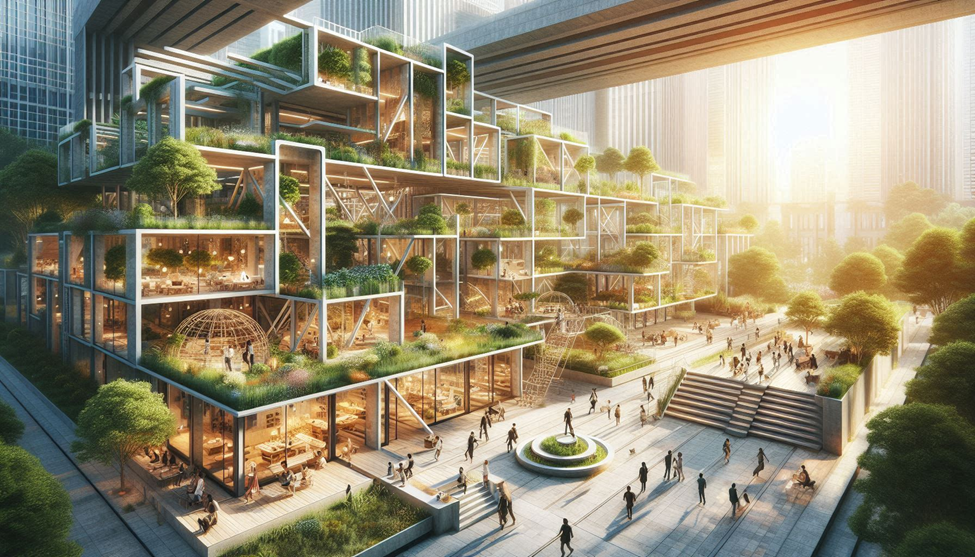
Lifestyle architecture offers a different approach. Instead of relying on willpower or emotional drive, it focuses on intentional systems—repeatable structures that guide behavior automatically. Just as buildings stand because of engineering rather than inspiration, sustainable lifestyles are built through design, not desire.
This guide explores how to construct a resilient, high-functioning life by replacing motivation with systems, aligning daily behavior with long-term identity, and creating environments that make the right choices easier by default.
Understanding Lifestyle Architecture
Lifestyle architecture is the deliberate design of one’s daily life using systems, structures, and environments that shape behavior without constant decision-making. It borrows principles from:
- Behavioral psychology
- Systems thinking
- Habit science
- Environmental design
- Performance optimization
Rather than asking, “How can I feel motivated today?” lifestyle architecture asks:
- What system makes this behavior inevitable?
- How can my environment guide me without effort?
- What structure supports consistency even on difficult days?
This shift reframes lifestyle change from an emotional challenge into an engineering problem.
Why Motivation Fails Over Time
- Motivation Is Emotionally Volatile: Motivation rises when life feels easy and disappears under stress, fatigue, or uncertainty. Real life, however, is unpredictable. A lifestyle that collapses during pressure is not sustainable.
- Motivation Requires Continuous Effort: Relying on motivation demands constant self-regulation. Over time, this leads to decision fatigue, burnout, and inconsistency.
- Motivation Encourages All-or-Nothing Thinking: When motivation drops, people often abandon habits entirely. Systems, by contrast, allow for imperfect execution without collapse.
Systems Thinking: The Foundation of Sustainable Living
A system is a repeatable process that produces consistent outcomes with minimal conscious effort. In lifestyle design, systems replace goals as the primary driver of behavior.
Goals vs. Systems
- Goals focus on outcomes (lose weight, be productive, reduce stress)
- Systems focus on processes (how you eat, move, work, recover)
Goals are temporary. Systems endure.
The Core Pillars of Lifestyle Architecture
1. Identity-Based Design
The most powerful systems are aligned with identity. Instead of asking what you want to achieve, ask who you are becoming.
- “I am someone who prioritizes health”
- “I am someone who protects mental clarity”
- “I am someone who values recovery”
When behavior aligns with identity, consistency becomes natural rather than forced.
2. Environment as the Primary Driver of Behavior
Human behavior is shaped more by environment than intention.
Architectural principle:
If a behavior requires effort, it will eventually be avoided.
Examples:
- Healthy food visible → healthier eating
- Phone out of reach → better focus
- Prepared workout clothes → increased movement
Design your surroundings so the desired behavior is the path of least resistance.
3. Friction Management
Lifestyle architecture works by:
- Reducing friction for positive behaviors
- Increasing friction for negative behaviors
This removes the need for constant discipline.
Examples:
- Pre-scheduled workouts
- Automatic savings systems
- App time limits
- Simplified meal routines
4. Decision Reduction
Every decision consumes mental energy. Systems reduce the number of decisions required each day.
Examples:
- Fixed morning routines
- Rotational meal plans
- Structured work blocks
- Consistent sleep schedules
The fewer decisions you make, the more energy you retain for meaningful work and relationships.
Designing Systems for Key Life Domains
Health & Physical Well-Being
Instead of “staying motivated to exercise,” design systems such as:
- Fixed training days
- Minimum viable workouts
- Habit stacking (movement after waking)
- Recovery protocols built into the week
Health becomes a default behavior, not a daily negotiation.
Mental Health & Emotional Stability
Mental well-being improves when recovery is systemized:
- Daily decompression rituals
- Screen-free transitions
- Scheduled solitude
- Nervous system regulation practices
These systems protect emotional health even during high stress.
Productivity & Work Life
Productivity systems prioritize energy, not time:
- Deep work blocks
- Clear task capture systems
- Defined start and stop times
- Recovery periods between cognitive loads
This prevents burnout and improves output quality.
Relationships & Social Life
Healthy relationships benefit from structure:
- Regular check-ins
- Clear boundaries
- Protected time for connection
- Reduced over commitment
Intentional systems prevent emotional neglect and social exhaustion.
The Role of Constraints in Lifestyle Design
Paradoxically, freedom increases when structure exists. Constraints reduce chaos and protect energy.
Examples:
- Limited social commitments
- Defined work hours
- Technology boundaries
- Financial systems
Constraints are not limitations—they are protective frameworks.
Lifestyle Architecture across Life Stages
A well-designed lifestyle is not static; it evolves in response to changing responsibilities, capacities, and priorities. Lifestyle architecture recognizes that systems must be adaptive rather than rigid, supporting individuals through different life stages without creating friction or burnout. What works in one phase of life may become unsustainable in another and effective design accounts for this reality.
In the early career stage, the primary demands are learning, exploration, and energy management. Systems in this phase should emphasize skill development, cognitive performance, and physical vitality. Structured routines for sleep, movement, focused work, and continuous learning help build a strong foundation without overwhelming capacity. The goal is not optimization, but stability—creating habits that support growth while preventing early burnout.
During midlife, responsibilities often expand significantly. Career pressure, family obligations, and financial demands require systems that prioritize recovery and sustainability. Lifestyle architecture in this stage focuses on protecting energy through boundaries, structured rest, consistent health practices, and realistic workload design. Recovery becomes non-negotiable, and success is measured by longevity rather than output intensity.
In later life, the emphasis shifts toward mobility, connection, and meaning. Systems are designed to preserve physical independence, maintain social bonds, and cultivate purpose. Movement quality, community engagement, and reflective practices become central. Productivity gives way to contribution and fulfillment.
Across all stages, flexibility is essential. Adapting systems is not a sign of failure, but evidence of intentional design responding intelligently to life’s evolution.
Common Mistakes in Lifestyle Design
- Overcomplicating systems
- Designing for ideal days only
- Ignoring recovery and rest
- Depending on motivation spikes
- Building systems without identity alignment
Effective systems are simple, forgiving, and repeatable.
From Reactive Living to Intentional Design
Reactive living is the default mode of modern life. Days are shaped by notifications, deadlines, external demands, emotional fluctuations, and unexpected disruptions. Decisions are made quickly, often under pressure, with little reflection on whether they align with long-term values or personal well-being. Over time, this constant reaction creates a sense of busyness without progress—movement without direction. Individuals may feel exhausted, overwhelmed, and disconnected, not because they lack effort, but because their lives are being responded to rather than designed.
Intentional design represents a fundamental shift in how life is approached. Instead of reacting to circumstances, individuals proactively structure their environments, routines, and commitments to support desired outcomes. This does not eliminate unpredictability, but it creates stable anchors that reduce chaos. Intentional design replaces constant decision-making with clear defaults, allowing energy to be directed toward meaningful work, relationships, and recovery rather than crisis management.
The transition from reactive living to intentional design begins with awareness. Recognizing patterns of over commitment, digital overstimulation, and emotional reactivity allows individuals to identify where structure is missing. From there, systems can be introduced—fixed routines, defined boundaries, environmental cues, and scheduled recovery—that guides behavior automatically. These systems reduce reliance on motivation and protect against stress-driven decisions.
Importantly, intentional design is not about rigid control or perfection. It is about alignment. A well-designed life remains flexible while still reflecting personal values and priorities. When systems are intentionally created, healthy behaviors persist even during low-energy periods. Focus improves, stress decreases, and consistency becomes sustainable.
Ultimately, intentional design transforms life from a series of urgent reactions into a coherent structure. It empowers individuals to live deliberately rather than defensively, replacing constant adjustment with stability. In doing so, it restores a sense of agency, clarity, and long-term balance that reactive living cannot provide.
Conclusion
The most successful lifestyles are not sustained by constant motivation, inspiration, or emotional intensity. Motivation is inherently unstable—it fluctuates with mood, energy levels, external stress, and life circumstances. On its own, it is an unreliable foundation for long-term success. Truly effective lifestyles are built on systems—intentional structures that continue to function on difficult days, during stressful weeks, and throughout uncertain seasons of life. Systems remove the burden of constant decision-making and willpower, allowing progress to occur even when motivation is absent.
When life is architected with intention, healthy behaviors require significantly less effort. Nutrition, movement, sleep, focus, and personal development are no longer dependent on daily resolve; they are embedded into routines, environments, and schedules. This design reduces friction between intention and action. Instead of asking, “Do I feel like doing this today?” the system answers for you by making the desired behavior the default. Over time, consistency replaces intensity, and sustainability replaces burnout.
Balance, when supported by systems, becomes achievable rather than inspirational. Work, recovery, relationships, and personal growth no longer compete for attention in chaotic cycles. Instead, they are given defined spaces within a structured life framework. This creates stability under pressure and adaptability during change. Systems allow individuals to respond to life rather than react emotionally to it, preserving mental and physical energy for what truly matters.
Growth, within a system-driven life, becomes inevitable. Small actions performed consistently compound into meaningful transformation. Progress no longer depends on perfect conditions or peak motivation; it unfolds through repetition and refinement. Motivation will always fade, but systems remain. A well-designed life does not function based on how you feel in the moment—it works because it has been deliberately engineered to support who you are becoming, even when conditions are far from ideal.
SOURCES
Baumeister, R. F., & Tierney, J. (2011) – Explores willpower, decision fatigue, and how mental resources are depleted through self-control demands.
Hahnemann, D. (2011) – Foundational work on cognitive effort, mental load, and the limits of attention and decision-making.
McEwen, B. S. (1998) – Introduced the concept of all static load, explaining how chronic stress impairs brain and cognitive function.
Rock, D. (2009) – Applies neuroscience to leadership, explaining how mental energy affects workplace performance and behavior.
Dalasi, A. (1994) – demonstrates the role of emotion regulation in rational thinking and decision-making.
Sapolsky, R. M. (2004) – Comprehensive examination of how prolonged stresses damages cognitive performance and mental health.
Moravian, M., & Baumeister, R. F. (2000) – Early experimental research on ego depletion and limited mental self-regulation capacity.
Hockey, G. R. J. (2013) – Detailed model of mental fatigue and performance regulation under sustained cognitive demand.
Petersen, S. E., & Posner, M. I. (2012) – Explains attention systems in the brain and how focus is managed and depleted.
Pagonis, G., & Cecil, M. (2007) – Demonstrates how mental training improves attention regulation and reduces cognitive fatigue.
Sonnentag, S., & Fritz, C. (2007) – Research on recovery experiences and how psychological detachment restores mental energy.
Kilgore, W. D. S. (2010) – examines the cognitive consequences of sleep deprivation on decision-making and attention.
Hofmann, W., Vows, K. D., & Baumeister, R. F. (2012) – Investigates self-control as a limited resource affected by daily demands and stressors.
Bosom, M. A. S., & Tops, M. (2008) – Neurobiological mechanisms behind mental fatigue and reduced executive control.
Csikszentmihalyi, M. (1990) – Introduces flow theory, explaining optimal mental energy states during deep engagement.
Goldman, D. (1995) – highlights emotional intelligence as a determinant of cognitive efficiency and mental resilience.
Aronstein, A. F. T. (2009) – explains how stress hormones impair prefrontal cortex function and executive control.
Sale, H. (1976) – Classical stress theory explaining adaptive and maladaptive responses to prolonged demand.
Lutz, A., Slater, H. A., Dunne, J. D., & Davidson, R. J. (2008) – shows how attention training improves cognitive efficiency and reduces mental exhaustion.
Bullock, S. L. (2010) – explores how pressure and mental overload disrupt high-level performance.
Kaplan, S., & Kaplan, R. (1989) – Introduces Attention Restoration Theory, emphasizing mental recovery through low-demand environments.
Tang, Y. Y., Hazel, B. K., & Posner, M. I. (2015) – Neuroscientific evidence of meditation improving self-regulation and mental energy.
Smith, A. (2019) – Reviews mental fatigue, cognitive workload, and implications for professional performance.
Minicamp, E. J., & Baumeister, R. F. (2011) – demonstrates how unfinished cognitive tasks drain mental resources.
Van deer Linden, D. (2011) – Integrative model of mental fatigue linking motivation, effort, and cognitive control.
HISTORY
Current Version
Dec 19, 2025
Written By
ASIFA




Leave a Reply